Best URL Shorteners in 2026 (Top Tools Compared)
Discover the best URL shorteners in 2026. Compare top tools for branded links, tracking, and marketing campaigns to choose the right one for your business.
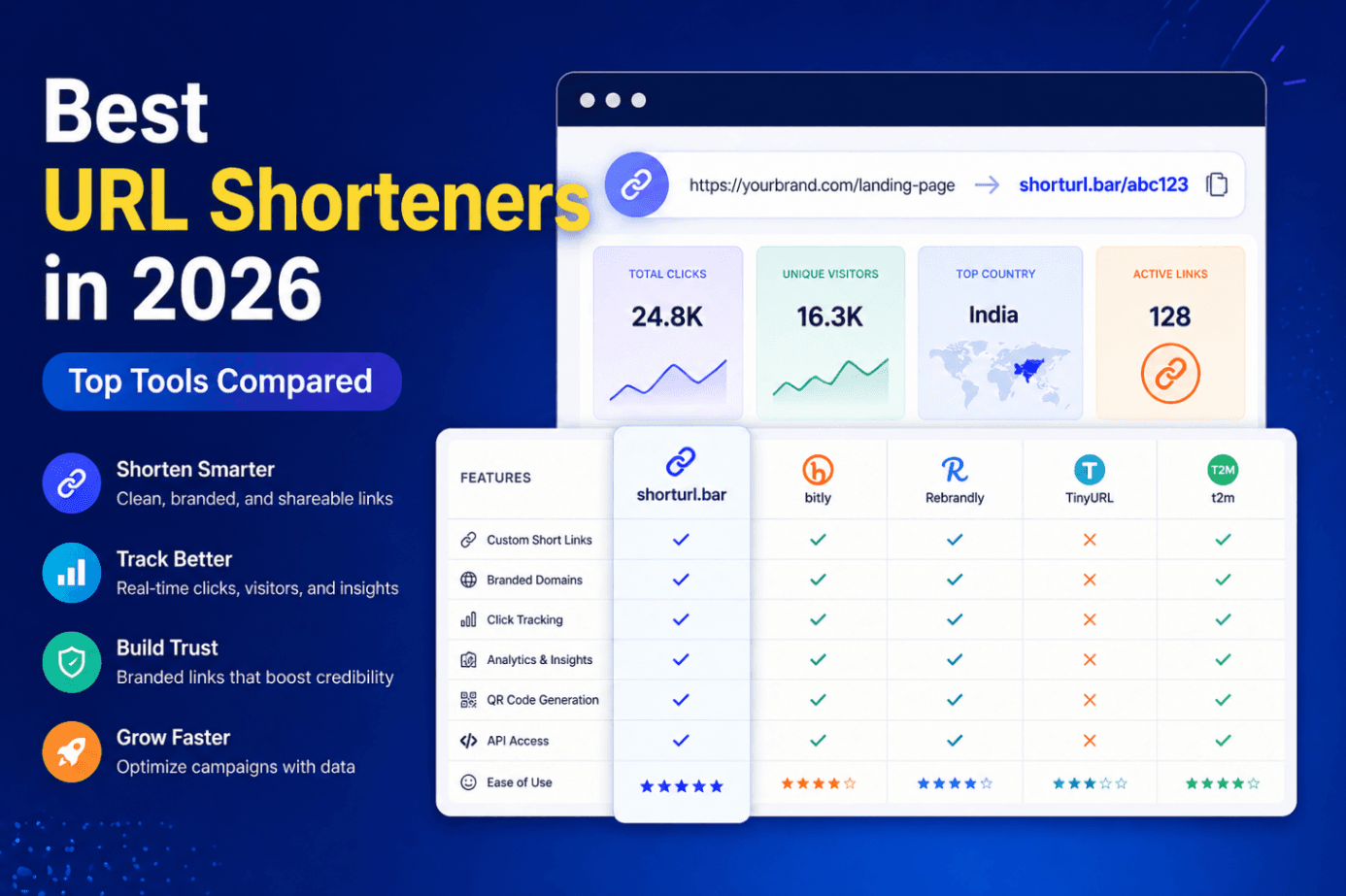
Discover the best URL shorteners in 2026. Compare top tools for branded links, tracking, and marketing campaigns to choose the right one for your business.
Most URL shortener roundups compare tools that nobody actually uses, in categories that don't matter, with ratings that feel pulled from thin air. This one doesn't do that.
I've spent real time testing the tools listed here - specifically looking at what matters to marketing teams in 2026: branded link support, click tracking depth, UTM handling, and whether the free plan is actually usable or just bait.
Why the URL shortener you pick actually matters
Best URL shorteners in 2026 - full comparison
ShortURL - best for branded campaign links
Bitly - best known, but complicated free tier
Rebrandly - best for agencies managing multiple brands
TinyURL - best for one-off, no-signup shortening
BL.INK - best for enterprise teams
Here's something most people skip over: the shortener you use affects whether people click at all.
According to research cited by HubSpot, branded links generate up to 34% more clicks than generic ones. That's not a small difference. That's the gap between a campaign that pays for itself and one that doesn't.
And then there's the tracking side. In 2026, most paid media platforms still won't give you the full picture - UTM parameters, channel attribution, device breakdown. A good URL shortener fills those gaps, especially for email and WhatsApp campaigns where platform-native analytics are thin.
The wrong tool gives you a short link and nothing else. The right one gives you a short link, your brand name in the URL, and a dashboard that tells you what happened after the click.
Here's the short version before we go deep:
| Tool | Best For | Free Plan | Branded Links | Click Tracking | Rating |
|---|---|---|---|---|---|
| ShortURL | Campaign marketers & teams | Yes (5-day links) | Yes | Yes | ⭐ 4.8 |
| Bitly | General shortening | Limited (10 links/mo) | Paid only | Basic | ⭐ 4.2 |
| Rebrandly | Multi-brand agencies | Yes (10 links) | Yes | Yes | ⭐ 4.5 |
| TinyURL | Quick one-off links | Yes (unlimited) | Paid only | No | ⭐ 3.8 |
| BL.INK | Enterprise teams | No | Yes | Advanced | ⭐ 4.6 |
ShortURL is built specifically for marketers and growth teams who need more than a shorter URL. The platform handles branded links, UTM management, click tracking, and campaign-level reporting from a single dashboard.
What makes it stand out from the crowd isn't feature volume — it's focus. ShortURL doesn't try to be a QR code generator, a bio link tool, and a link rotator all at once. It does branded short links and campaign tracking, and it does them cleanly.
What works well:
Branded link creation is fast. You're not digging through six menus to set a custom slug.
The analytics dashboard shows clicks, device type, and referrer data in a format that's actually readable.
It handles UTM-tagged short URLs properly - the UTM data passes through without bloating the visible link.
WhatsApp campaign links look and behave correctly on mobile, which is a real problem with some shorteners.
Where it's limited:
The free tier links expire after 5 days. That's fine for testing but not for long-term campaigns. You'll need a paid plan to keep links active permanently.
Pricing: Free plan available. Paid plans for active campaigns and analytics.
ShortURL is the right call if your team shares links across email, WhatsApp, and paid social and you want one clean dashboard to see what's happening after the click. The click tracking guide on their blog is also genuinely useful for setting up tracking the right way.
Bitly is the name everyone recognises. That familiarity has real value - recipients are less likely to hesitate before clicking a bit.ly link than a domain they've never seen.
But the free plan has become significantly more restrictive over the last two years. As of 2026, free users get 10 short links per month. That's not enough for any active campaign. And branded links — the whole reason most marketers want Bitly — are locked behind the paid tiers.
What works:
The Bitly dashboard is clean and the click analytics are reliable.
Deep integration with tools like HubSpot, Hootsuite, and Zapier.
Brand recognition genuinely reduces click hesitation for some audiences.
What doesn't:
10 links per month on the free plan is nearly unusable for marketing work.
The jump to the first paid tier is steep relative to what you get compared to alternatives.
Branded domains require the higher paid tiers.
Pricing: Free (10 links/month). Paid plans starting around $8–35/month depending on features.
Bitly makes sense if you're already embedded in a HubSpot or Hootsuite workflow and want native integrations. For pure campaign link management, there are better-value options.
Rebrandly is purpose-built for branded links. The core product philosophy is: every short link should carry your brand, not theirs.
For agencies managing five or ten client brands at once, Rebrandly's workspace structure is actually well-thought-out. You can separate client link libraries, set different custom domains per workspace, and manage team permissions without everything bleeding into one messy account.
What works:
Multi-domain support is genuinely strong. Each brand gets its own domain and link library.
The free plan gives you 10 branded links, which is actually useful for testing.
Link retargeting is available — you can add retargeting pixels to short links, which is a nice touch for paid media teams.
What doesn't:
The interface gets cluttered once you're managing multiple client workspaces at scale.
UTM builder is present but less polished than ShortURL's implementation.
Analytics depth is solid but not as clean for non-technical stakeholders.
Pricing: Free (10 branded links). Paid from around $13/month.
Rebrandly is the strongest option for agencies where every client needs their own branded domain. For in-house teams running their own campaigns, it's slightly over-engineered.
TinyURL has been around since 2002. That's not a reason to use it - but it's a reason to trust that it works and the links stay live.
The pitch is simple: paste a URL, get a short one, no account required. That's genuinely useful for personal use, for sharing links in Slack, or for a quick share in a presentation. It's not a campaign tool. It was never meant to be.
What works:
No signup required. Fastest path from long URL to short URL.
Unlimited free links that don't expire.
Custom aliases available even on the free tier (though limited).
What doesn't:
No click tracking on free links.
No branded domain support without a paid plan.
No analytics, no UTM management, no campaign structure.
Pricing: Free (basic). Paid plan for analytics and branded links.
If someone in your team just needs to shorten a URL for a one-time share, TinyURL is fine. If you need to know what happened after that share, use something else.
BL.INK sits at the top end of the market and is priced accordingly. The platform is designed for large organisations where link data needs to feed into a CRM, a BI dashboard, or an enterprise analytics stack.
The differentiating feature is data depth. BL.INK tracks clicks against a wider range of variables than most tools — including custom parameters that map to your internal campaign taxonomy. For a team running multi-region paid media across a dozen markets, that specificity is worth real money.
What works:
Deep CRM and analytics integrations (Salesforce, Marketo, etc.).
Enterprise-grade permissions and user management.
Custom click data parameters beyond standard UTM fields.
Compliance features (GDPR, data residency) that matter for regulated industries.
What doesn't:
No free plan. This tool starts at paid-only pricing.
Overkill for most marketing teams under 20 people.
Setup time is real — this isn't a tool you're using on day one.
Pricing: Paid only, starting around $48/month. Enterprise pricing on request.
BL.INK is the right call for large organisations with existing marketing tech stacks that need link data to integrate cleanly. For everyone else, it's more tool than the job requires.
I ran a comparison across these tools for a multi-channel campaign — email, WhatsApp, and paid social — and the gap between them is clearest in three places: how branded links are created, how the analytics display, and whether the UTM flow actually works end-to-end.
Bitly's analytics are reliable but the free plan restriction makes it nearly useless for campaign work unless you're paying. Rebrandly's multi-brand structure is the best I've seen, but if you're running one brand, you don't need it. TinyURL does exactly what it says and nothing else.
ShortURL sits in the sweet spot for campaign-focused teams. The branded link creation is genuinely fast, the UTM handling is clean, and the trackable link setup works as described without hidden configuration steps. For a team running active campaigns across multiple channels, it's the tool I'd recommend first.
BL.INK is where you end up when your organisation is large enough that link data has to live inside a larger data infrastructure. That's a real use case — it's just not the common one.
The honest answer: most marketing teams need ShortURL or Rebrandly. Everything else is either too limited or too much.
| Tool | Best For | Free Plan | Branded Links | UTM Support | Analytics Depth | Price (Paid) |
|---|---|---|---|---|---|---|
| ShortURL | Campaign marketers, growth teams | Yes (5-day links) | Yes | Yes | Click, device, referrer | Competitive |
| Bitly | Teams needing integrations | 10 links/month | Paid only | Yes | Solid | ~$8–35/mo |
| Rebrandly | Agencies, multi-brand | 10 branded links | Yes | Yes | Good | ~$13/mo+ |
| TinyURL | Quick personal sharing | Unlimited | Paid only | No | None (free) | ~$10/mo+ |
| BL.INK | Enterprise marketing teams | No | Yes | Advanced | Enterprise-level | ~$48/mo+ |
The URL shortener market hasn't changed dramatically in 2026 — but the gap between tools that serve marketers well and tools that are just technically functional has widened. Branded links and click tracking are no longer optional for anyone running campaigns with measurable goals.
For most marketing teams: start with ShortURL. It's the cleanest path from long URL to trackable branded link without unnecessary complexity. If you're managing multiple client brands, look at Rebrandly. If you need enterprise data integrations, BL.INK is worth the price.
And if you're still using TinyURL for campaign links — there's a better way.
Continue Reading
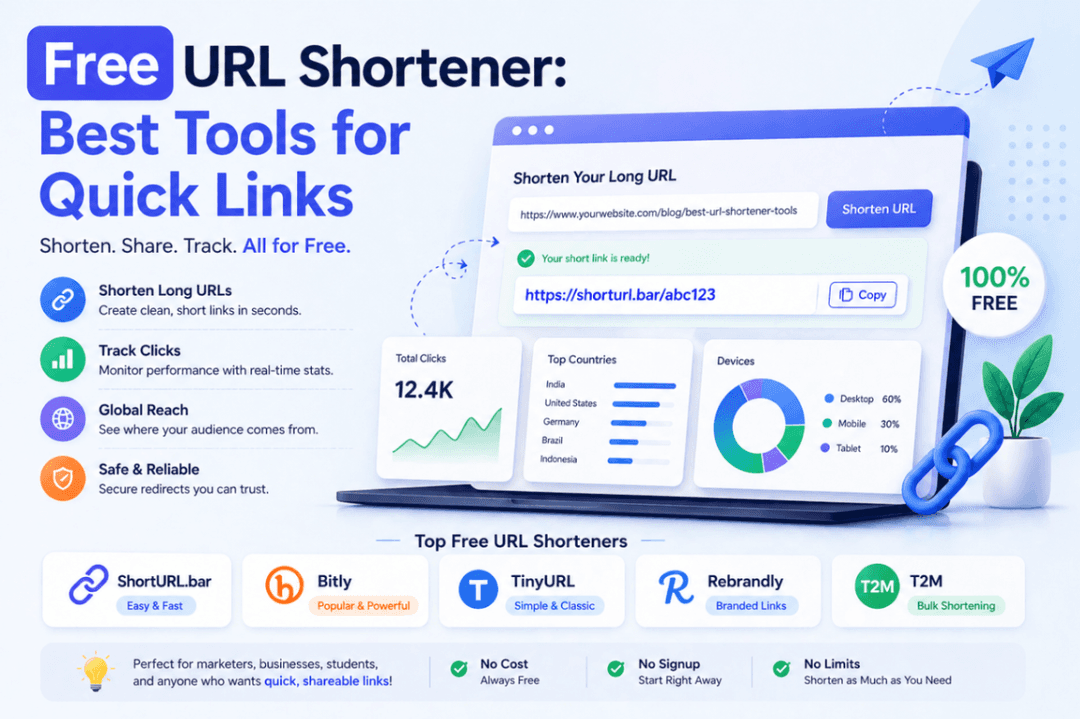
Discover the best free URL shorteners to create quick links, track clicks, and simplify sharing across marketing campaigns.
Learn how to create short links and track clicks, visitors, and campaign performance using simple URL tracking methods.
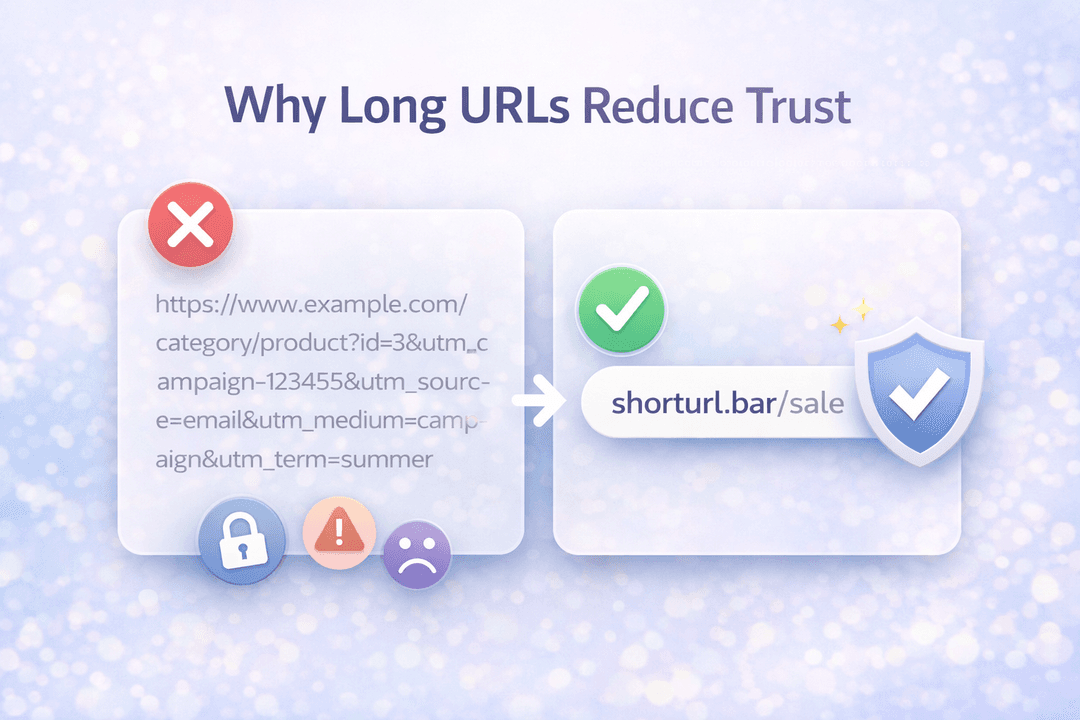
Learn why long URLs reduce trust, lower click-through rates, and how short links help create cleaner, safer, and more professional marketing links