At ShortURL.bar, we work with marketing teams daily on exactly this problem. The question isn't just "should I use a short link?" It's "does my short link look like it's from me - or does it look like something forwarded from a stranger?" This guide breaks down branded links vs generic short links with specifics: what each one is, where the real differences show up, and which one you should actually be using.
What Are Branded Links?
A branded link is a short URL built on your own custom domain or a brand-registered short domain. Every link you share carries your business name - not someone else's.
Here's what that looks like:
https://go.yourbrand.com/summer-sale
https://yourbrand.link/email-offer
https://brand.co/black-friday
Short. Clean. And before a user even clicks, they can see who sent it.
That visibility is the whole point. Branded links don't just redirect traffic - they signal identity. When someone in a WhatsApp group or email inbox sees yourbrand.link/offer, they already know who it's from before making any decision to click.
What Are Generic Short Links?
Generic short links are the ones most people start with. They use a public, shared domain operated by a third-party service - Bitly, TinyURL, or similar tools.
They look like this:
https://bit.ly/4xyZ12A
Or this:
https://tinyurl.com/2abcx9d
They work. The redirect happens. The user gets to the right page. But the URL itself tells them nothing about who sent it or where it's going.
And here's the thing - that anonymity isn't neutral. In a world where phishing links, spam messages, and scam campaigns are increasingly common, an unfamiliar short domain actually creates a small moment of friction. Users hesitate. Sometimes they don't click at all.
That friction is real, measurable, and avoidable.
Branded Links vs Generic Short Links: The Main Difference
Both types shorten a long URL. That's where the similarity ends.
| Feature | Branded Links | Generic Short Links |
|---|---|---|
| Brand name in URL | ✓ Yes | ✗ No |
| Custom domain | ✓ Yours | ✗ Third-party (bit.ly, tinyurl) |
| Trust signals | ✓ Strong | ✗ Weak to neutral |
| Professional appearance | ✓ Yes | ✗ Random characters |
| Campaign organization | ✓ Custom slugs | ✗ Auto-generated |
| Click-through confidence | ✓ Higher | ✗ Lower |
| Best for business use | ✓ Yes | ✗ Casual / personal only |
The biggest difference is brand visibility and trust. But as you'll see below, those two things affect nearly everything else in your marketing performance.
Why Branded Links Are Better for Marketing
1. Branded Links Build More Trust
This is the core reason - and the data backs it up.
A 2023 study by Rebrandly found that branded links receive up to 39% more clicks than generic short links for equivalent campaigns. The mechanism is simple: people click things they recognize. If your brand name is visible in the link, they already have context before the click happens.
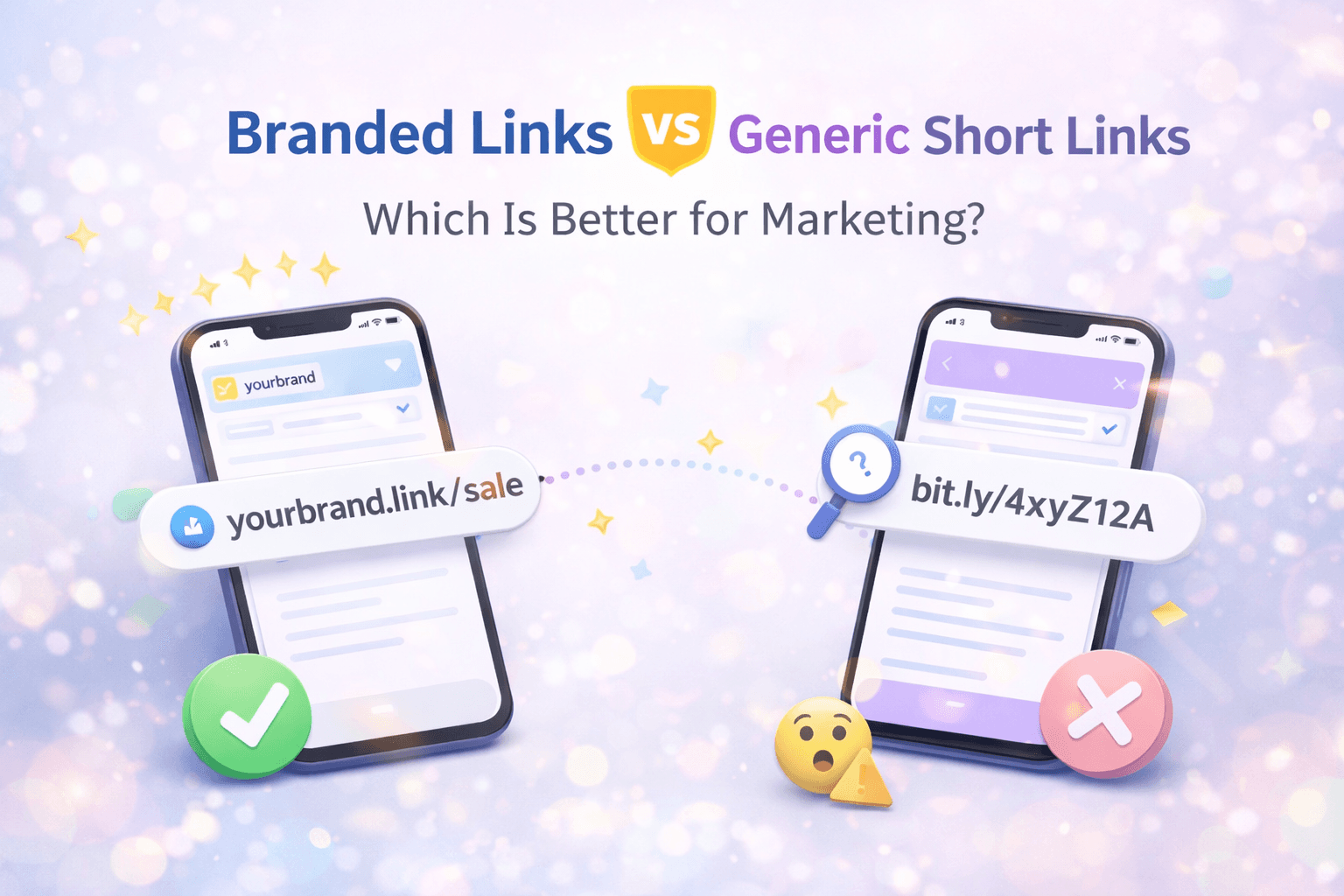
Generic links create the opposite problem. bit.ly/4xyZ12A looks identical whether it leads to your product page or a phishing site. Your audience can't tell the difference. So some of them don't click. And you never know how many didn't.
This matters most in WhatsApp, email, and SMS - channels where users are especially cautious about unknown links. In those environments, branded links aren't a nice-to-have. They're a conversion factor.
2. Branded Links Look More Professional
Appearance affects how people perceive your business before they've interacted with you.
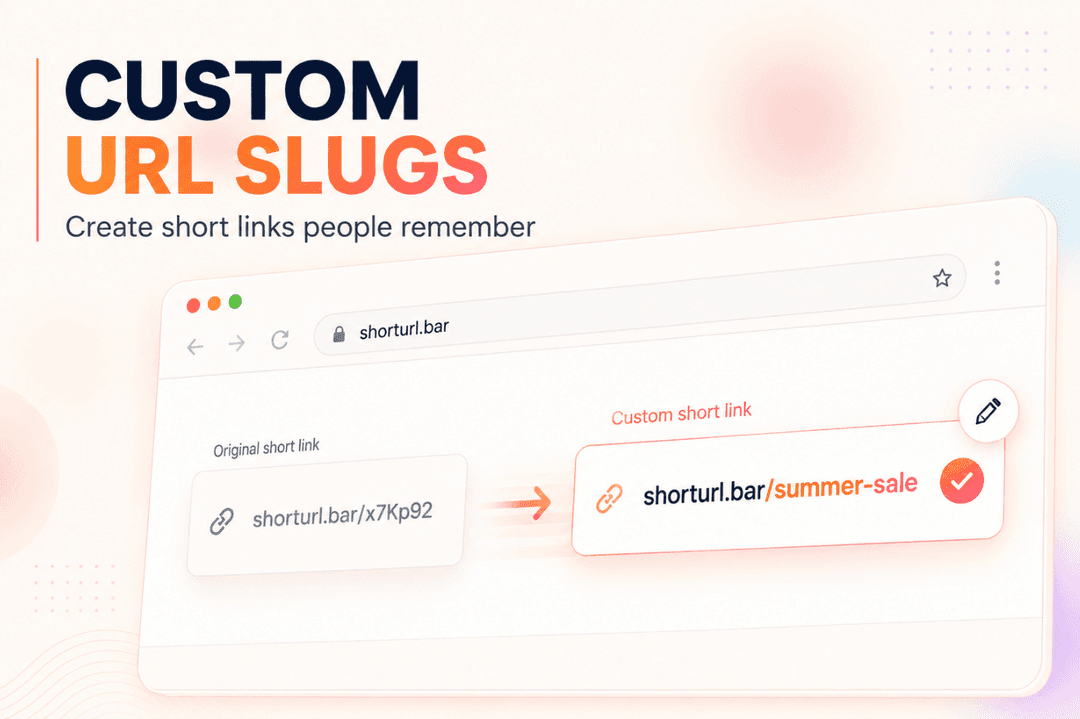
yourbrand.link/summer-sale signals that someone thought about this. The domain is intentional. The slug is readable. It looks like a professional team put it together.
bit.ly/4xyZ12A signals nothing - except that someone ran a URL through a free tool.
For customer-facing campaigns, that first impression is part of your brand experience. It's worth getting right.
3. Better Click-Through Potential
Because branded links look more trustworthy and recognizable, they tend to perform better in real campaigns - not by accident, but by design.
According to research by Bitly published in 2022, branded links can improve click-through rates by 34% compared to generic counterparts in email marketing specifically. The logic is simple: familiarity reduces the hesitation that kills clicks.
For marketing teams running high-volume campaigns, a 34% CTR improvement isn't marginal. It compounds across every campaign you run.
4. Stronger Brand Consistency
Every link you share is a small brand touchpoint. Generic short links hand that touchpoint to Bitly or TinyURL. Your audience sees their domain, not yours.
Branded links keep your name in front of your audience at every step - in the message, in the link, and in their browser before the page loads. That consistency adds up over time and across channels.
It's not a dramatic effect per individual link. But run 50 campaigns a year and suddenly you've either reinforced your brand 50 times or given free exposure to a third-party shortener 50 times.
5. Easier Campaign Organization
Branded links with custom slugs are significantly easier to manage than auto-generated generic strings.
Compare these:
| Generic Link | Branded Link |
|---|---|
| bit.ly/3xFmQ9T | yourbrand.link/email-july |
| tinyurl.com/yck9d3xz | yourbrand.link/whatsapp-offer |
| bit.ly/4aBcR7n | yourbrand.link/sms-promo |
Six months from now, which set tells you anything about what those links were for?
Custom slugs like yourbrand.link/black-friday or yourbrand.link/newsletter-march make campaign reporting, link audits, and team collaboration dramatically simpler. This is especially true if you're running more than three campaigns simultaneously.
When Generic Short Links May Still Be Used
I want to be fair about this. Generic short links aren't useless - they're just wrong for most business use cases.
They make sense when:
- You're sharing a personal link once and branding doesn't matter
- You're doing internal testing and don't need a clean URL
- You're using a platform that doesn't support custom domains yet
- You're in an early stage and haven't set up a branded domain
For casual, personal, or temporary use, a free generic shortener is fine. You don't need a branded domain to send a link to a friend.
But if you're a business, a marketing team, a startup, an agency, or even a solo creator who cares about how their content is perceived - generic links are working against you.
Branded Links vs Generic Short Links for Different Channels
Email Marketing
Branded links are clearly better for email. Spam filters are more suspicious of generic shortener domains (Bitly and TinyURL links have been abused heavily in phishing campaigns), which means generic links can hurt deliverability. A branded domain you control carries no such history - and looks more credible in the inbox.
WhatsApp Marketing
WhatsApp users are cautious. An unfamiliar short link in a WhatsApp message looks like spam. A branded link - even if the recipient hasn't seen your domain before - at least shows a name rather than a random string. That small difference in perception reduces drop-off.
We covered the full picture of short link performance in WhatsApp campaigns in our guide to trackable short links for marketers.
SMS Campaigns
SMS has two constraints: character limits and trust. Branded links handle both. They're short enough to fit, and they include your name - which is especially important when SMS messages often arrive without much context about the sender.
Social Media
On social platforms, branded links support a cleaner post appearance and stronger brand image. They're also more shareable - people are more likely to forward a link that looks intentional rather than auto-generated.
Paid Ads and Campaign Tracking
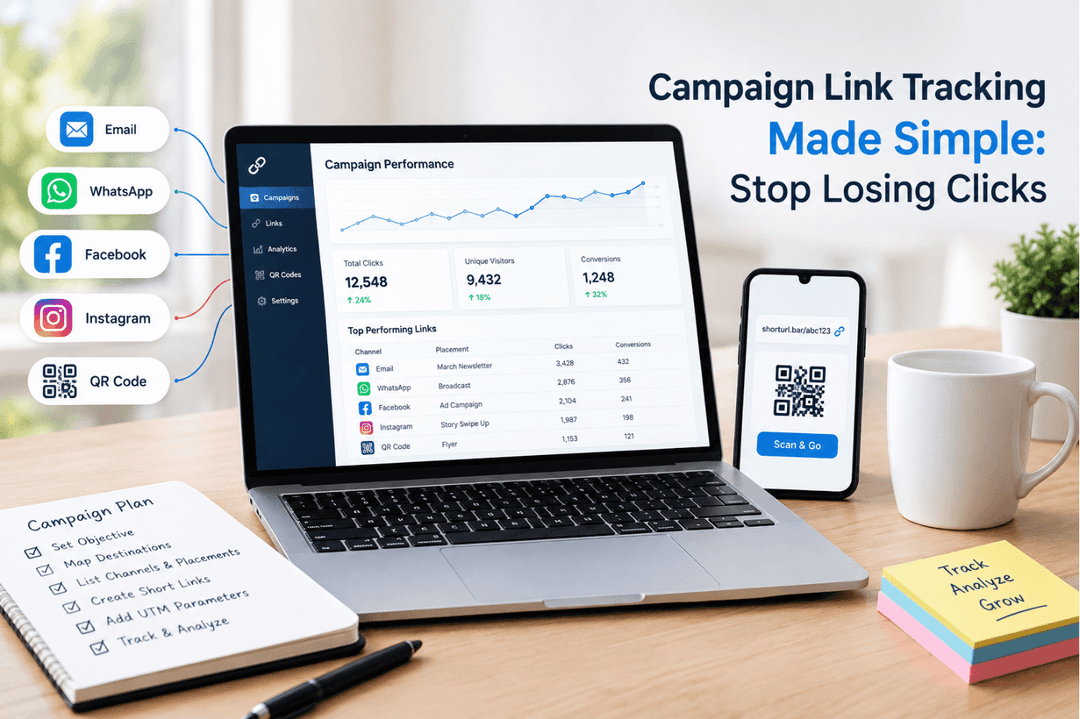
Branded links are better for ad campaigns for two reasons: they look more relevant to the offer being promoted, and custom slugs make it much easier to organize and report on performance across multiple ad sets. Pair them with a campaign link tracker and you get full visibility into which creative is actually driving clicks.
SEO Perspective: Why This Topic Matters
Short links don't directly affect search rankings - and I won't pretend they do.
But branded links support SEO indirectly in a few real ways.
First, branded links tend to drive higher click-through rates in promotion campaigns, which sends more engaged referral traffic to your content. Visitors who arrive because they recognized and trusted your link tend to stay longer and bounce less. Those behavioral signals matter to Google.
Second, using a consistent branded domain across all your campaigns builds domain-level recognition over time. People start to associate your link domain with your content - which increases direct and repeat traffic, both of which are strong organic signals.
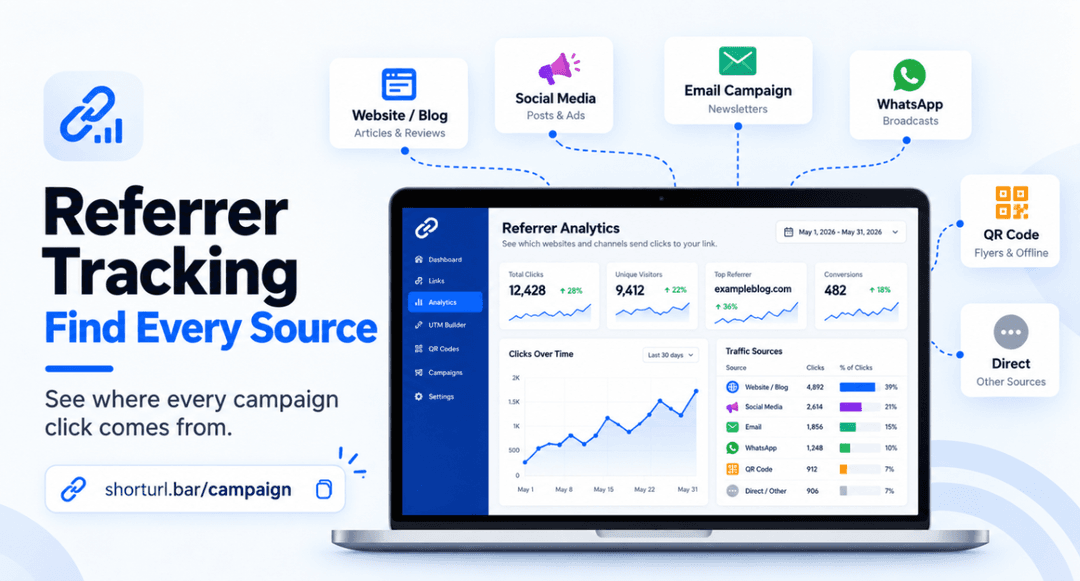
Third - and this one matters for content strategy - tracking which promotion channels drive the most traffic to your blog posts helps you double down on the platforms that actually grow your organic footprint. If your ShortURL.bar dashboard shows LinkedIn driving 3× the engaged traffic of Twitter for the same article, that's a content distribution insight that directly shapes your SEO-supporting content strategy.
Relevant keyword themes this post targets:
- branded links vs generic short links
- branded URL shortener
- custom short links
- URL shortener for marketers
- trackable short links
How to Choose Between Branded Links and Generic Short Links
Short answer: if you're running any marketing activity at all, choose branded links.
Here's a more specific breakdown:
Choose branded links if you:
- Run email, WhatsApp, SMS, or social campaigns
- Care about how your brand appears in every touchpoint
- Want cleaner campaign organization with readable slugs
- Are sharing links with customers, not just internally
- Want better click-through rates from the same audience
- Plan to track performance across channels
Generic links are acceptable if you:
- Are sharing a one-time personal link
- Are doing quick internal tests
- Haven't set up a branded domain yet (but plan to)
- Don't have any audience trust concerns
If you're unsure which category you're in, ask yourself: would you put a generic bit.ly link on your business card? If the answer is no - and it should be - you shouldn't put it in your campaigns either.
For a deeper look at what a branded URL shortener actually includes, see our guide on what is a branded URL shortener and why marketers need it.
The Moment I Stopped Using Generic Links
I got this wrong for longer than I'd like to admit.
For the first year of running link-heavy campaigns, I was using a generic shortener for everything - WhatsApp broadcasts, newsletter CTAs, SMS promotions. It was fast. It was free. And I genuinely thought click-through rates were just what they were.
Then a client switched from generic to branded links mid-campaign - same offer, same list, same send time - and their WhatsApp click rate went from 11% to 16% in a single send.
Five percentage points doesn't sound dramatic until you do the math on a list of 8,000 contacts. That's 400 additional clicks per send from one change that took about a day to set up.
What actually changed wasn't the offer or the copy. It was the link. The audience could see the brand name before clicking. That was enough.
I've changed my recommendation since then. For any team running customer-facing campaigns, branded links aren't optional - they're the baseline.
Final Verdict: Branded Links vs Generic Short Links
Both types shorten a URL. That's the extent of what they have in common.
Branded links give you: trust, consistency, better click-through rates, professional appearance, cleaner campaign management, and full ownership of every link touchpoint.
Generic links give you: a working redirect and nothing else.
For personal or one-time use, generic is fine. For businesses, marketers, agencies, and anyone who cares about how their audience perceives them before a click - branded links are the clear choice.
If you're ready to move to branded links, ShortURL.bar's branded URL shortener lets you connect your own domain, create custom slugs, and track performance across every campaign from one dashboard. No technical background needed to get started.
And if you want to see how branded links work alongside click tracking and UTM parameters, check out our click tracking guide and the UTM link shortener - both built specifically for marketers running multichannel campaigns.
Frequently Asked Questions
What is the difference between branded links and generic short links?
Branded links use your own custom domain - like yourbrand.link/offer - so your business name appears directly in the URL. Generic short links use a third-party public domain like bit.ly or tinyurl.com, with no brand identity. The core difference is trust: branded links tell the audience who sent the link before they click; generic links don't.
Are branded links better than generic short links for marketing?
Yes, for almost every marketing use case. Branded links build more trust, produce higher click-through rates, and support stronger brand consistency across email, WhatsApp, SMS, and social. A 2023 Rebrandly study found branded links receive up to 39% more clicks than equivalent generic links. For business campaigns, there's no good reason to use generic links.
Do branded links improve click-through rates?
They do, and it's because of trust. When users see a recognizable brand name in a short URL - especially in WhatsApp messages or email - they're more likely to click because they know who sent it. Research from Bitly's 2022 data showed up to 34% CTR improvement in email campaigns using branded vs generic links for the same audience.
When should I use generic short links instead of branded ones?
Generic short links are fine for casual personal use, internal testing, or one-time shares where your brand reputation isn't at stake. If you're sharing a link with a customer, running a campaign, or building any kind of audience - use branded links. The setup time is minimal and the performance benefit is measurable.
Move to Branded Links
If you're ready to move to branded links, ShortURL.bar's branded URL shortener lets you connect your own domain, create custom slugs, and track performance across every campaign from one dashboard. No technical background needed to get started.
Start Creating Branded Links