That link is doing quiet damage - to trust, to brand perception, and in many cases, to click-through rate. At ShortURL.bar, Pragnesh Boghani and the Ethnic Infotech team have helped marketing teams across industries fix exactly this problem. A branded URL shortener is the tool that closes the gap between the professional content you create and the anonymous link you're currently attaching to it. Here's what it is, how it works, and why your team probably needs one.
What Is a Branded URL Shortener?
A branded URL shortener is a tool that converts long URLs into short, shareable links using a custom domain you own or register - not a public third-party domain.
The clearest way to understand it is by example. Say your full campaign URL looks like this:
https://www.example.com/products/summer-sale-collection ?utm_source=email&utm_medium=campaign&utm_campaign=july_promoA branded URL shortener turns that into:
https://yourbrand.link/summer-saleSame destination. But now the link is short, readable, and - most importantly - carries your brand name in the URL itself. Before anyone clicks, they already know who sent it.
That's the core idea. Short on the outside, smart on the inside, and branded throughout.
How a Branded URL Shortener Works
The mechanics are straightforward. When you create a short link using a branded URL shortener:
- You enter your long destination URL into the tool
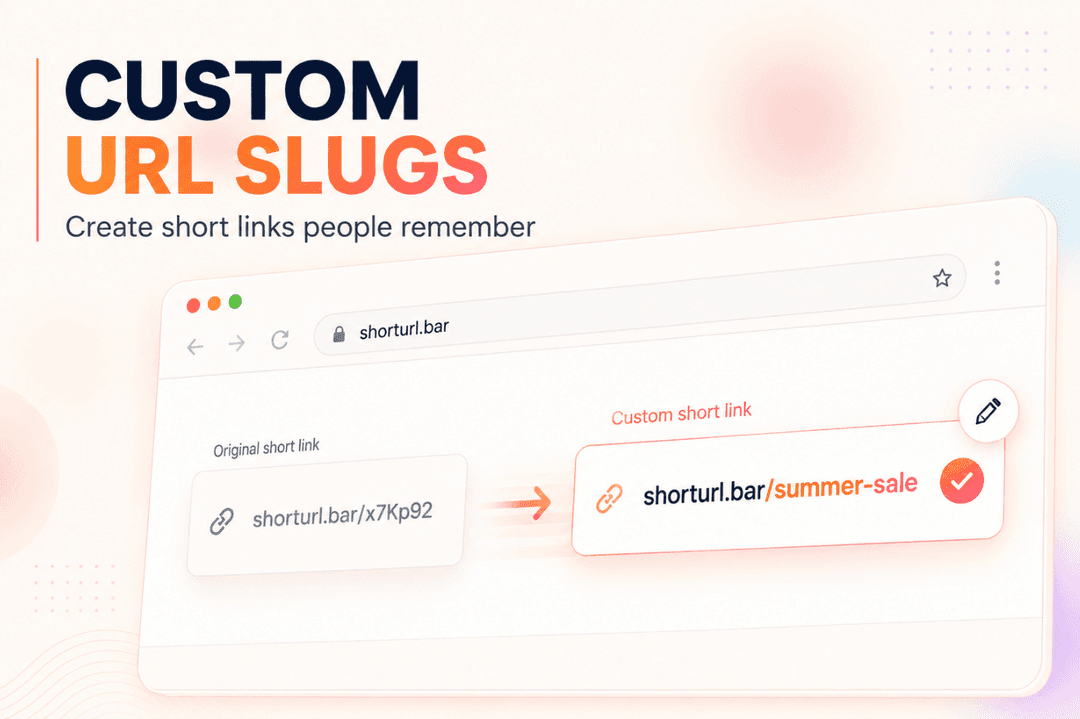
- You choose a custom slug - the readable part after the domain, like /summer-sale or /email-offer
- The tool maps your short link to the destination URL and stores it on your branded domain
- When a user clicks the link, the system logs the click (time, device, location) then redirects them to the destination in under a second
- Click data appears in your dashboard - organized by campaign, channel, or date range
The whole redirect happens so fast users don't notice it. The tracking happens invisibly. And the branded domain means your link looks identical to your website domain - not like a detour through someone else's platform.
Most marketing teams use branded short links across:
- Email newsletters and automated flows
- WhatsApp marketing broadcasts
- SMS promotions
- Social media posts and bios
- Paid advertising campaigns
- Influencer and affiliate tracking
- QR code campaigns on print or packaging
Each channel gets its own link. And the dashboard shows you how each one performed.
Why Marketers Need a Branded URL Shortener
1. Branded Links Build Trust
This is the single biggest reason - and it shows up in measurable results.
When users see your brand name in a short URL, they recognize who sent it before clicking. That recognition reduces hesitation. And hesitation is one of the primary reasons people don't click links in email, WhatsApp, and SMS.
Generic short links create the opposite problem. bit.ly/4xyZ12A looks exactly the same whether it leads to your product page or a phishing scam. Your audience can't tell the difference - so some of them don't risk it.
According to a 2023 study by Rebrandly, branded links receive up to 39% more clicks than equivalent generic short links. The content and offer were identical. The only variable was whether the URL showed a recognizable brand name.
Trust is not a soft metric when it translates directly into click-through rate.
2. Short Links Look Cleaner and More Professional
Long URLs stuffed with UTM parameters, session IDs, and tracking codes don't belong in customer-facing communication. They look like a mistake. Or worse - like something you're trying to hide.
Branded short links solve that without sacrificing any tracking capability. Your audience sees yourbrand.link/offer. Your analytics dashboard sees everything the long URL would have recorded. The tracking still happens. The mess just disappears.
This matters for small teams and large ones equally. Brand perception is built in small moments. A clean link is one of them.
3. Easier Campaign Tracking
Here's where it gets practically valuable for marketing operations.
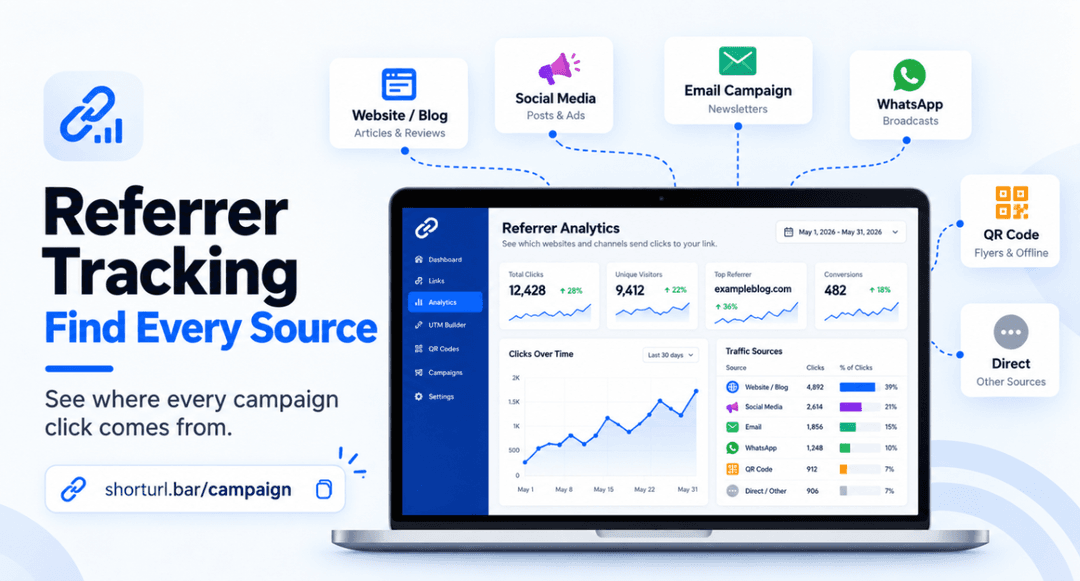
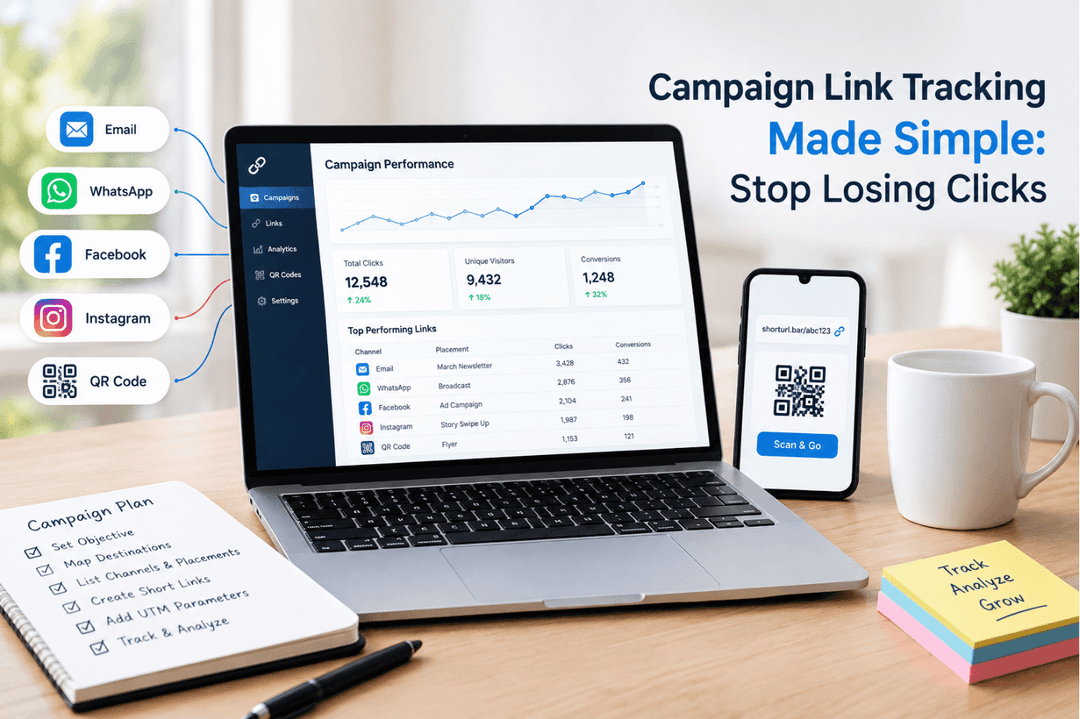
When every campaign uses its own branded short link, tracking becomes clean and separated by default. You don't need to dig through combined analytics to figure out whether clicks came from your email or your WhatsApp broadcast. You already know, because the links are different.
For example, the same offer running across four channels might use:
- yourbrand.link/email-july - email newsletter
- yourbrand.link/whatsapp-july - WhatsApp broadcast
- yourbrand.link/sms-july - SMS campaign
- yourbrand.link/social-july - Instagram story
Four links, four data streams, one dashboard. Channel attribution becomes effortless - which means campaign decisions become faster and better.
We covered how this works in more detail in our guide to trackable short links for marketers.
4. Better Brand Recall
Every link you share is a tiny brand impression. Generic short links hand that impression to Bitly or TinyURL. Branded links keep it with you.
Over months of campaigns, this compounds. Your audience starts to recognize your link domain. They associate it with reliable content or offers from your brand. That familiarity increases trust over time - and trust increases clicks without any change to the offer itself.
It's not dramatic per link. Across a year of campaigns, it's significant.
5. Improved Performance in Offline and Mobile Campaigns
Branded short links are also just more practical in physical contexts.
If someone sees your link on a printed flyer, a conference banner, or a product package - they need to be able to type it. yourbrand.link/sale is typeable. bit.ly/3xFmQ9T is not.
Same applies to video content. If a creator mentions a link verbally or shows it on screen briefly, a short branded URL is memorable in a way a generic string never is.
For any campaign that touches offline or mobile audiences, branded links aren't just better - they're often the only version that actually works.
Branded URL Shortener vs Generic Short Link
The difference in one table:
| Feature | Branded URL Shortener | Generic Short Link |
|---|---|---|
| Domain in URL | Your brand name | Third-party (bit.ly, tinyurl) |
| Trust signal | ✓ Strong - audience recognizes sender | ✗ Weak - anonymous destination |
| Custom slug | ✓ You choose (/summer-sale) | ✗ Auto-generated (/4xyZ12A) |
| Click tracking | ✓ Full analytics dashboard | Partial (depends on tool) |
| Campaign organization | ✓ Clean naming by channel | ✗ Random strings, hard to manage |
| Email deliverability | ✓ Clean domain history | ✗ Shared domain, abuse risk |
| Brand consistency | ✓ Your name on every link | ✗ Promotes third-party domain |
| Best for | Business, marketing teams | Casual / personal use |
The comparison really isn't close for marketing use cases. Generic links exist for convenience. Branded links exist for performance.
Best Use Cases for Branded Short Links
Email Marketing
Branded links belong in every email campaign. They look cleaner in the inbox, pass spam filters more reliably (shared shortener domains have a history of abuse that can hurt deliverability), and signal professionalism before the recipient opens the message.
WhatsApp Marketing
WhatsApp users are especially cautious about unfamiliar links. A branded short link reduces that hesitation - not because the user consciously evaluates it, but because they recognize your name and proceed without friction. We covered the specifics in our WhatsApp marketing short link guide.
Social Media Campaigns
Social captions have limited space, and links compete with the rest of your message. Branded short links keep posts clean while still giving you full click analytics on every post.
Paid Ads
Ad campaigns need clean destination URLs - both for user experience and for reporting. Branded short links let you create distinct tracked links per ad set without exposing long UTM strings in the ad copy.
QR Code Campaigns
Short links are ideal for QR codes because they generate simpler, cleaner QR patterns that scan more reliably than long URLs. And with a branded link behind the QR code, you can update the destination URL after printing without reprinting the code. Check out our URL shortener with QR code tool to see how that works.
How to Choose the Right Branded URL Shortener
Not all branded URL shorteners are built the same. Some offer custom domains but weak analytics. Others have strong tracking but clunky link management. Here's what to actually evaluate:
| Feature | Why It Matters |
|---|---|
| Custom branded domain support | Without this, you don't have a branded link - just a generic one with extra steps |
| Easy short link creation | If it takes more than 30 seconds to create a link, your team won't use it consistently |
| Campaign-based organization | Group links by campaign so reporting stays clean at scale |
| Click tracking and analytics | You need per-link data: total clicks, unique clicks, device, location, time |
| Custom slugs | Readable slugs like /email-offer are essential for campaign management |
| Reliable, fast redirects | Slow redirects hurt user experience and can affect ad quality scores |
| Simple user interface | If the tool needs training, adoption drops. Look for something the whole team can use on day one |
ShortURL.bar was built around all seven of these criteria - specifically for marketing teams that need clean links, real data, and a fast setup without a technical team. You can explore the full feature set at shorturl.bar/branded-url-shortener-for-marketers.
What Happened When We Switched to Branded Links
For the first several months of running campaigns for clients, I used the same generic shortener for everything. It was fast. It was free. And I assumed the link format didn't matter - that people clicked based on the offer, not the URL.
I was wrong about that.
The clearest example I saw was a WhatsApp campaign for a retail client. We were sending the same promotional message to the same list on alternate weeks. Week one, we used a generic bit.ly link. Week two, we switched to their branded domain - same offer, same copy, same send time.
The click rate went from 9.4% to 14.1%.
That's not a marginal difference. On a list of 6,000 contacts, that's roughly 280 additional clicks from one change that took about 20 minutes to set up - connecting a custom domain to their ShortURL.bar account.
I've tested this pattern enough times now to say it consistently: the branded link lift is real, it's measurable, and it's available to any team willing to spend an afternoon on setup. If you're still using generic links in customer-facing campaigns, you're leaving clicks on the table.
Final Thoughts
A branded URL shortener isn't just a tool that makes links shorter. It makes them trustworthy. It makes your campaigns more organized. It keeps your brand name in front of your audience at every click. And it gives your marketing team real data to work with - not guesswork.
If your business shares links in email, WhatsApp, social, SMS, ads, or any offline material - and you're not using branded short links yet - the upgrade is easier than it sounds and the results show up quickly.
For teams ready to make the switch, ShortURL.bar lets you connect a custom domain, create branded links, and start tracking performance across all channels from one dashboard. No technical setup required.
And if you want to understand how branded links compare to generic ones in more detail, see our guide on branded links vs generic short links - it covers the data behind the click-through rate differences and when each type actually makes sense.
Frequently Asked Questions
What is a branded URL shortener and how does it work?
A branded URL shortener converts long URLs into short, custom links using your own domain name - like yourbrand.link/offer instead of bit.ly/4xyZ12A. When a user clicks the link, the system logs the click and redirects them to the destination page in under a second. All click data - time, device, location, channel - appears in your analytics dashboard.
Why do marketers need a branded URL shortener?
Because every link you share is a brand touchpoint. Generic short links hand that touchpoint to a third-party domain. Branded links keep your name in the URL, which builds trust before the click, improves click-through rates (up to 39% more clicks according to Rebrandly's 2023 data), and keeps campaigns organized with readable custom slugs instead of random characters.
What is the difference between a branded and generic short link?
A branded short link uses your own custom domain - like go.yourbrand.com/sale - so your business name appears in the URL. A generic short link uses a public shared domain like bit.ly or tinyurl.com with auto-generated characters. Both redirect to the same destination, but branded links carry identity and trust signals that generic links don't.
How do branded short links improve click-through rates?
They reduce hesitation. When someone in WhatsApp, email, or SMS sees a URL with a recognizable brand name, they proceed without friction. When they see bit.ly/4xyZ12A, they have no context - and some of them don't click. The 2023 Rebrandly study found branded links receive up to 39% more clicks than equivalent generic links across the same campaigns and audiences.
For teams ready to make the switch
ShortURL.bar lets you connect a custom domain, create branded links, and start tracking performance across all channels from one dashboard. No technical setup required.
Explore the full feature set