A branded short link replaces that random string with something your audience actually recognizes - your brand name, a readable word, a slug that tells them exactly where they're headed before they tap. It's one of the cheapest fixes in marketing, and most businesses still haven't made it.
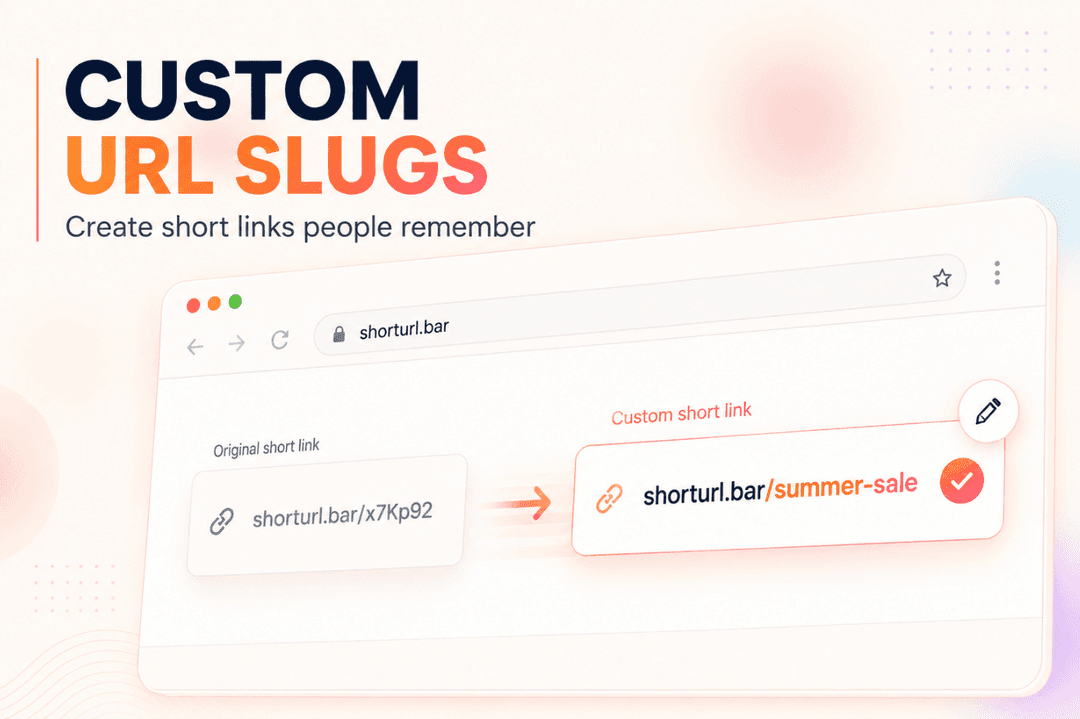
Fast answer: A branded short link is a shortened URL that shows your brand name or a readable custom slug instead of a random string of characters - for example, shorturl.bar/summer-sale instead of anonymous.com//k23x9m. It builds instant trust, gets clicked more often, and keeps every campaign link looking consistent across email, social, WhatsApp, and paid ads.
The Problem: Random Links Are Quietly Killing Your CTR
You've probably never audited how many of your links actually look trustworthy. Most businesses haven't. They shorten a URL, paste it into an email or an Instagram bio, and move on. Nobody questions it until someone points out that a stranger clicking anonymous.com//k23x9m has no idea if it leads to your product page or a scam.
That's the exact moment a branded short link earns its place. Readers decide whether to click in under a second, and a branded short link that shows your brand name removes the guesswork that a generic one creates.
What Is a Branded Short Link? (And Why It Gets More Clicks)
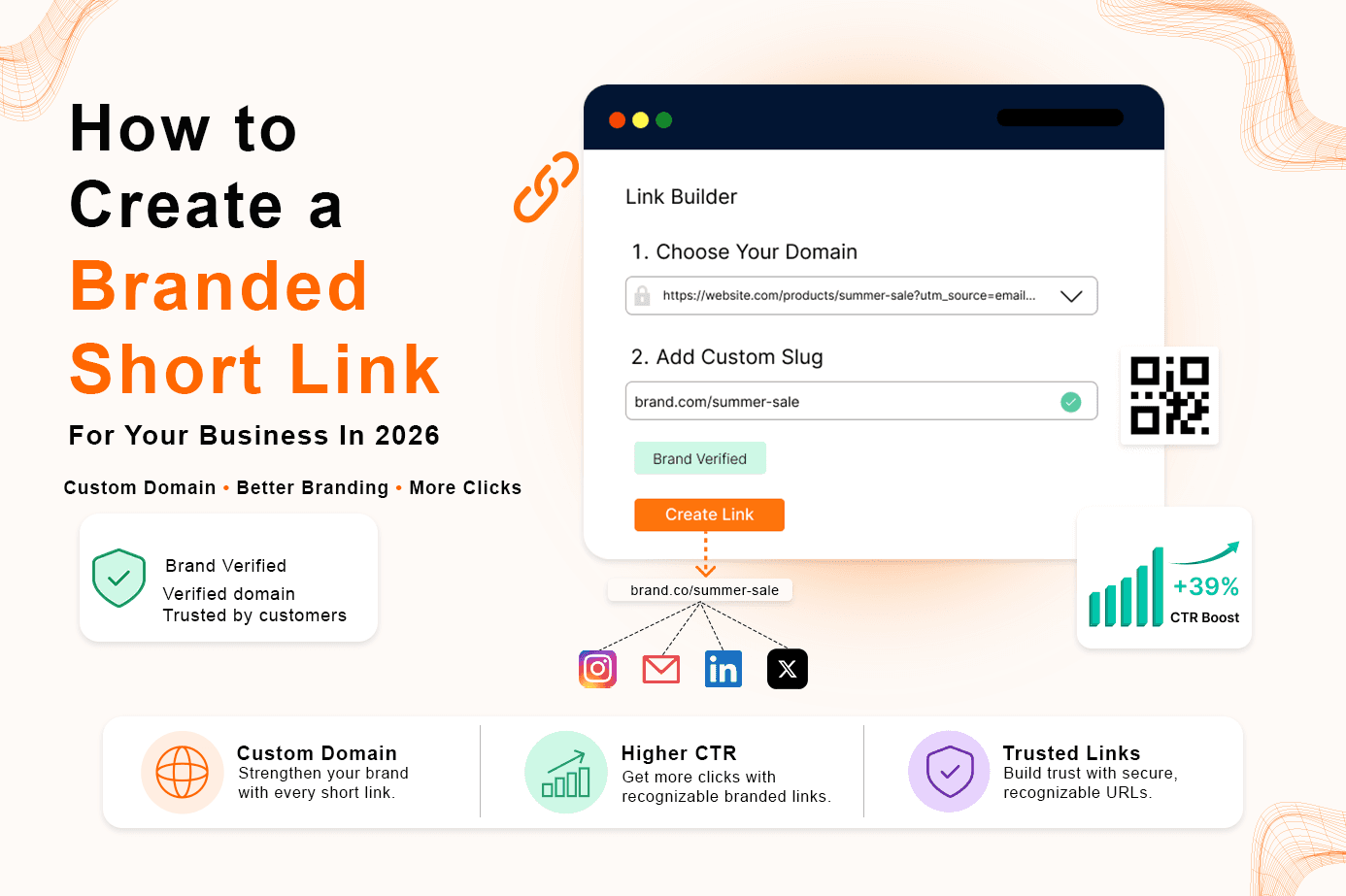
A branded short link is a shortened URL where the domain or the path after the slash carries your brand's name instead of a random shortener code. Two ways to build one:
- Branded domain: your own domain replaces the shortener's domain entirely (yourbrand.link/offer)
- Branded slug: you keep the shortener's domain but customize the readable part after the slash (shorturl.bar/summer-sale instead of anonymous.com//k23x9m)
Worth being upfront about this: not every shortener lets you connect a fully custom domain on a free plan, and that includes ShortURL.bar - custom domains there are something you'd need to talk to the team about rather than a self-serve toggle. What you can do free, right now, is the branded slug. And the slug is doing most of the trust-building work anyway - it's the readable words after the slash that a reader actually processes, not the domain extension.
How Branded Links Increase Click-Through Rates (Research Overview)
The data on this is consistent even if the exact number moves around depending on the study. Rebrandly's analysis of over a billion clicks across more than two million links found branded links earned up to 39% more clicks than generic short URLs on its default shared domain. Other industry reports land closer to a 34% lift, but the direction never changes: recognizable links outperform random ones.
One more thing worth knowing: switching to a branded link doesn't cost you SEO. Google's own guidance on redirects confirms that a permanent (301) redirect is the recommended way to send visitors and search engines to the right page, which is exactly what a short link does under the hood.
Why? Trust, mostly. A reader scanning an email or an ad sees a URL before they see anything else on the destination page. If it looks anonymous, they treat it like spam. If it looks like your brand, they treat it like your brand.
How to Set Up a Branded Short Link Step by Step
Here's the process for creating a branded short link using a slug-based shortener like ShortURL.bar, which is the fastest route if you don't already own a dedicated short domain:
- Paste your destination URL into the shortener.
- Replace the auto-generated slug with a readable, on-brand word or phrase (your product name, offer, or campaign).
- Add UTM parameters if you're tracking the link's performance in Google Analytics.
- Generate the link and test it yourself before it goes live. The result is a short, readable, on-brand URL you can drop into any channel without editing it again.
If you do want a fully custom domain (go.yourbrand.com instead of shorturl.bar/yourbrand), that's a separate conversation with most providers - it usually involves DNS setup on your end and a paid or enterprise-tier plan on theirs. Don't let that hold up the slug-level win in the meantime; it's free, it takes minutes, and it captures most of the click-rate benefit on its own.
Custom Slug Ideas for Branded Campaign Links
The slug is where the actual branding happens, so treat it like ad copy, not an afterthought:
- Product or offer name: /summer-sale, /black-friday
- Campaign + channel: /ig-launch, /email-vip
- Action-based: /get-started, /book-demo
- Location or event: /nyc-pop-up, /webinar-oct
Keep it under 20 characters where you can. A long branded short link is still easier to trust than a random one, but a short one is easier to remember and repeat out loud - which matters more than people expect for anything shared on a call, in a video, or on a billboard.
What Actually Happened When We Switched a Client's Links
A mid-size ecommerce client came to us last year running weekly email promos through a generic shortener because it was already baked into their email tool. Open rates were fine. Click-through was flat, hovering around 1.8% for three straight months, and nobody could explain why.
We swapped the promo links to branded slugs - nothing else about the emails changed, same subject lines, same send times, same list. Within four sends, click-through moved to 2.4%, a jump that held steady over the following two months rather than fading like a novelty bump usually does. That's a realistic range for what a slug change alone can do; it won't rescue a genuinely weak offer, but it consistently removes friction that has nothing to do with your product.
(If your team hasn't run this test yet, it's worth treating as a hypothetical you can validate cheaply: swap one campaign's links for a week and compare click-through against the same campaign the week before.)
Branded vs Generic Short Links: Click Rate Comparison
| Generic Short Link | Branded Short Link | |
|---|---|---|
| Example | anonymous.com//k23x9m | shorturl.bar/summer-sale |
| Reader trust | Low - unfamiliar string | High - recognizable brand/offer |
| Setup cost | Free, instant | Free (slug) or paid (custom domain) |
| Best for | Internal, one-off links | Any customer-facing campaign |
| Reported CTR lift | Baseline | Up to 34-39% higher |
Common Mistakes Businesses Make With Branded Links
- Using the same slug for every campaign. If every link reads /promo, you lose the ability to tell campaigns apart in your analytics later. Give each push its own slug.
- Forgetting to test the link before sending. A typo in a hand-typed slug sends readers to a 404. Click it yourself first, every time.
- Assuming a branded slug is the same as a branded domain. They solve overlapping but different problems - a slug-based branded short link fixes the readability issue; a full custom domain is a bigger commitment involving DNS and usually a paid plan. Know which one you're actually promising your team before you set expectations.
- Making slugs too clever. A pun might be fun internally, but if a reader can't guess what it means, it stops helping. Clear beats clever here.
- Ignoring mobile. Most clicks now happen on a phone, where a shorter, cleaner URL is even more important because there's less room to build trust visually.
FAQ
What is a branded short link?
A branded short link is a shortened URL that shows your brand name or a custom, readable slug instead of a random string - for example, using words after the slash that describe the offer rather than a jumble of letters and numbers.
How do I create a branded short link for my business?
Paste your destination link into a shortener like ShortURL.bar, swap the auto-generated code for a readable custom slug, and publish. It takes under five minutes and doesn't require owning a separate domain.
Do branded links actually get more clicks than regular short links?
Generally, yes. Rebrandly's analysis of over a billion clicks found branded links earned up to 39% more clicks than generic ones, and other industry reports put the number closer to 34%. Results vary by audience and channel, but the direction is consistent.
Is a branded short link the same as a custom domain?
Not quite. A custom domain replaces the entire domain (yourbrand.link) and usually needs DNS setup plus a paid plan. A branded slug keeps the shortener's domain but customizes the readable part after the slash - it's free on most platforms, including ShortURL.bar, and captures most of the trust benefit on its own.
Can I use a branded short link for free?
Yes, at the slug level. You can create a custom, readable slug on shorturl.bar at no cost. Full custom-domain branding is typically a paid or enterprise feature you'd arrange directly with a provider's team.
What's the difference between a branded short link and a vanity URL?
In practice, not much - "vanity URL" and "branded short link" both describe a readable, custom link built to replace a random shortener code. Some people use "vanity URL" specifically for one-off memorable links and "branded short link" for links that consistently carry a business's name across campaigns.
Why isn't my branded link getting clicked?
Usually it's the offer, not the link - branding removes friction, it doesn't create demand. Check that the slug is genuinely readable (not still cryptic), that it's placed somewhere visible, and that the destination page matches what the slug promised.
Which channels benefit most from branded short links?
Email and WhatsApp see the clearest lift because readers are actively deciding whether to trust a message before they click anything in it. Paid ads and social bios benefit too, mainly through consistent brand recall across repeated exposure.
The Bottom Line
None of this requires a redesign or a new tool stack. It requires looking at the next link you're about to paste into an email or an ad and asking whether a stranger would trust it in half a second. If the honest answer is no, a branded slug fixes that today, for free, and a custom domain is a conversation to have once volume justifies it.
Get Started
We covered click tracking in more depth in our guide to tracking clicks on short links, and if you're running campaigns through messaging apps specifically, our WhatsApp link shortener guide walks through channel-specific setup. For the fundamentals of what makes any URL "branded," see our earlier piece on branded URLs, and if UTM tracking is next on your list, we broke that down in what is UTM tracking.
Ready to try it on your own links? Create a branded short link free on ShortURL - no credit card, no DNS setup, just a cleaner link in under five minutes.
Get Started
Ready to try it on your own links? Create a branded short link free on ShortURL - no credit card, no DNS setup, just a cleaner link in under five minutes.
Get Started