What Is a Vanity URL?
You've seen them before. A link that reads shorturl.bar/summer-sale instead of shorturl.bar/k23x9m. That's a vanity URL and the difference between those two links is bigger than it looks.
Here at ShortURL, we work with marketing teams who send thousands of links a week across email, WhatsApp, paid campaigns, and social posts. The single most consistent finding? Links that look readable get clicked more than links that look random. Every time.
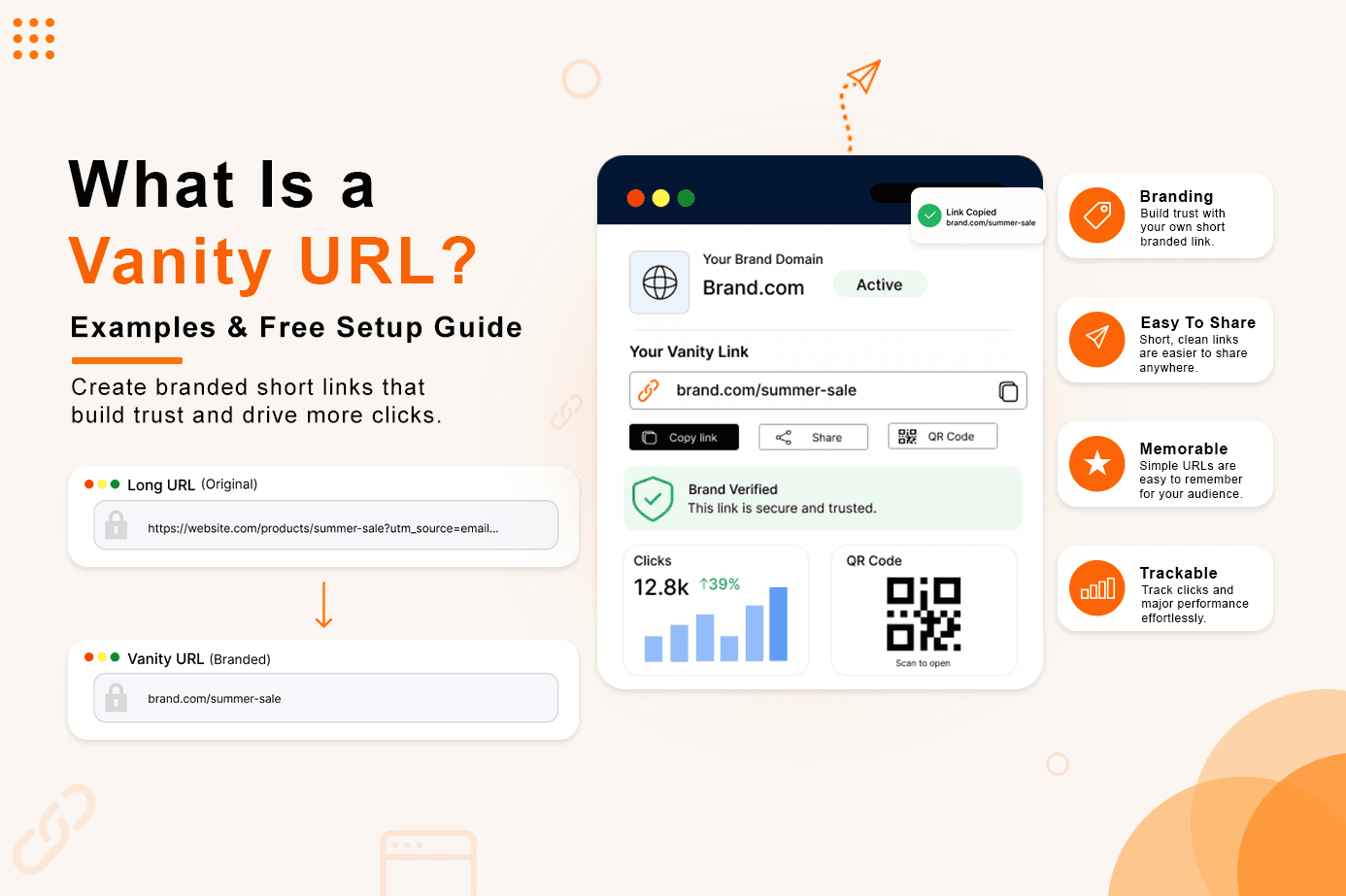
A vanity URL is a custom short link where the back-half the part after the slash is replaced with words chosen by you. Instead of an auto-generated string of characters, you get something that signals intent, builds trust, and carries your brand into every channel it touches.
The Problem Worth Solving
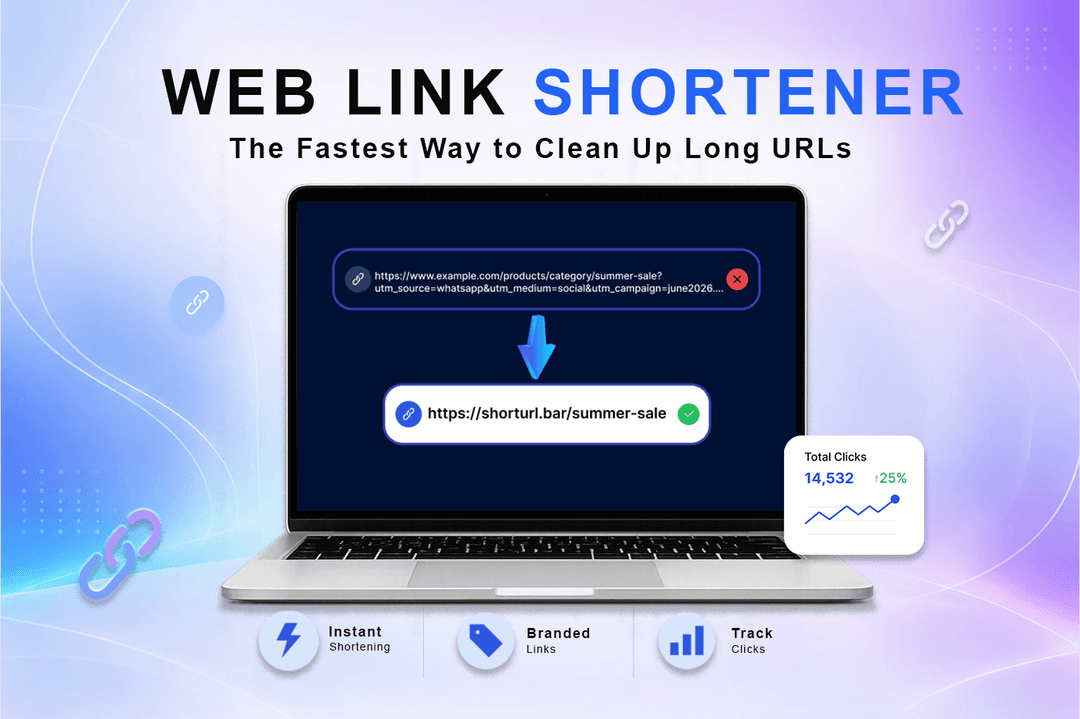
Here's the link that usually goes out in a campaign email:
Nobody reads that. Nobody trusts it at first glance. And in a WhatsApp message or a printed flyer? It's basically unusable.
Marketers know links need to be short. But short alone isn't enough. A link like shorturl.bar/k23x9m is short, sure but it tells the reader absolutely nothing. It could go anywhere. That uncertainty creates friction right before the click.
Vanity URLs fix both problems at once. They're short and they communicate something useful.
Vanity URL vs. Regular URL The Real Difference
A regular URL reflects your site's structure. It was built for navigation, not for sharing. Something like:
It's functional. But it's cluttered, hard to remember, and awkward in any context where someone has to type or read it aloud.
A vanity URL strips that down to what matters:
Same destination. Completely different experience for the reader before they click.
The key distinction is intent. Regular URLs are built by CMS systems and site architecture. Vanity URLs are built by marketers, for specific campaigns or pages, with the reader's perception in mind.
Vanity URL vs. Branded Short Link Not Quite the Same Thing
This is where people get confused, and honestly the confusion is understandable. These two terms overlap a lot. But they're not identical.
A vanity URL is defined by its readable back-half. The domain can be generic or branded what makes it a vanity URL is that someone chose the slug intentionally.
shorturl.bar/free-trial → vanity URL (custom back-half)A branded short link is defined by its domain. The domain itself reflects the brand, often on a shortened version of the company name.
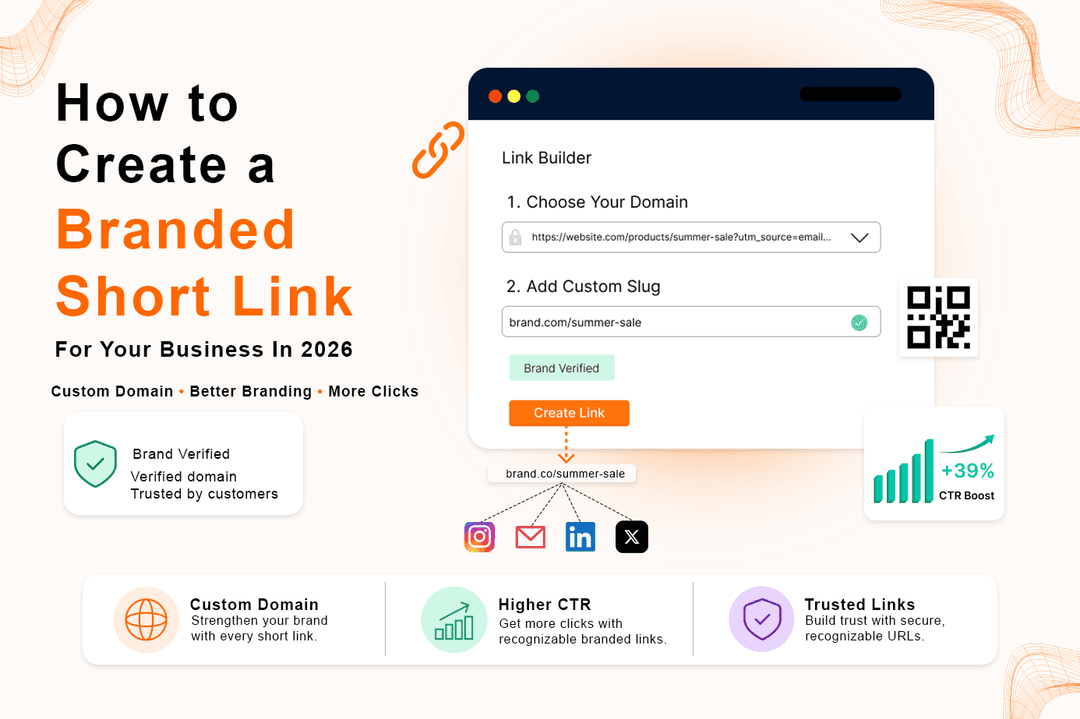
go.yourcompany.com/r7bk → branded short link (custom domain, generic back-half)The most powerful option? Both. A branded domain and a custom back-half:
go.yourcompany.com/summer-sale → branded short link that's also a vanity URLFor most marketers starting out, getting the custom back-half right matters most. The domain upgrade comes later. ShortURL lets you do both.
Real Vanity URL Examples
These are the kinds of vanity URLs teams actually use in campaigns:
| Purpose | Generic Short Link | Vanity URL Version |
|---|---|---|
| Newsletter CTA | shorturl.bar/x9m3k | shorturl.bar/june-offer |
| Product launch | shorturl.bar/p2z7r | shorturl.bar/new-dashboard |
| Webinar registration | shorturl.bar/q1b9d | shorturl.bar/live-workshop |
| WhatsApp campaign | shorturl.bar/k3j8s | shorturl.bar/whatsapp-deal |
| Referral page | shorturl.bar/t4n6p | shorturl.bar/refer-friend |
| Support article | shorturl.bar/m5v2w | shorturl.bar/setup-guide |
The vanity URL version in every row does the same job but it also tells the reader what they're getting before they click.
Why Vanity URLs Actually Matter for Click Rates
Most people assume vanity URLs are a branding nice-to-have. Nice presentation, sure, but does it actually move numbers?
It does. And there's data to back it up.
According to research published by Rebrandly, branded links which include custom back-halves generate up to 39% more clicks than generic short links sharing the same destination. The mechanism is straightforward: people are more willing to click a link when they can predict where it goes.
On top of that, Marketing Science Institute research found that link trust is evaluated in under 400 milliseconds faster than most people consciously process anything. By the time your reader has decided whether to click, they've already formed an opinion of the link. A vanity URL wins that split-second judgment more often than a random string does.
And here's the thing that often gets missed: vanity URLs also reduce the link-anxiety problem in WhatsApp and SMS. In channels where phishing is a real concern, a readable branded link does something a random slug can't it signals legitimacy before the click even happens.
How to Create a Vanity URL (Step-by-Step)
You don't need a custom domain to start. ShortURL lets you create vanity URLs with custom back-halves on your first link.
- 1. Go to shorturl.bar and create a free account. No credit card needed. Free links include click analytics.
- 2. Paste your destination URL into the link shortener. This is the full URL you want to send people to your landing page, blog post, product page, or wherever.
- 3. Look for the "Custom back-half" or "Custom slug" field. Before you shorten, you'll see an option to set a custom ending. This is where the vanity URL magic happens.
- 4. Type a readable, relevant slug. Keep it under 20 characters. Use hyphens to separate words. Match it to your campaign: free-trial, summer-sale, june-webinar.
- 5. Generate the link. Your vanity URL is live. Copy it and paste it anywhere email, WhatsApp, paid ads, print materials.
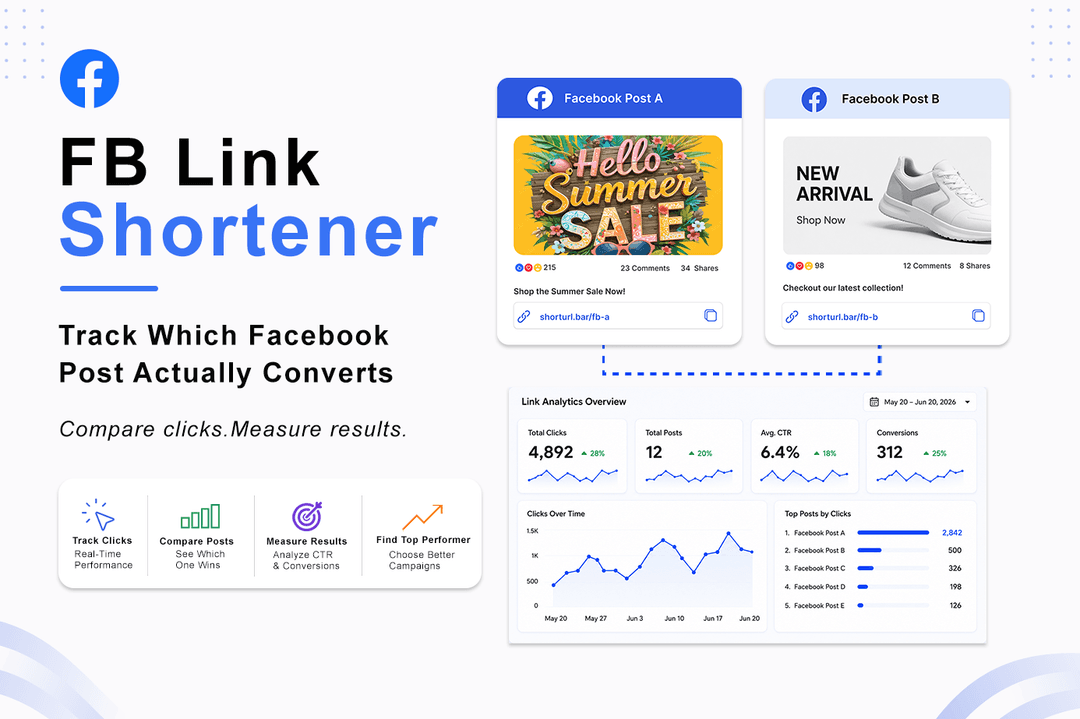
- 6. Track performance in the ShortURL dashboard. Every click, device type, location, and referral source shows up in your analytics. That's data you don't get with a plain long URL.
The whole process takes under two minutes. And once the link is live, it works everywhere the same branded short URL across all your channels, with unified tracking behind it.
Ready to Simplify Your Links?
Create branded short URLs, track every click, generate QR codes, and share smarter with ShortURL.bar.
Get Started Free →What Changed When We Started Using Custom Links
I'll be direct about what I've seen running link campaigns through ShortURL.
The clearest impact wasn't in the analytics. It was in what stopped happening. Teams stopped second-guessing links before sending them. Campaign managers stopped asking "does this look right?" before a WhatsApp broadcast. The back-half answered the question before anyone had to ask it.
The second thing that changed was reporting. When every link has a custom slug that matches the campaign shorturl.bar/q2-email-launch, shorturl.bar/q2-social-launch, shorturl.bar/q2-paid-launch the analytics dashboard becomes readable without explanation. You don't need to cross-reference a spreadsheet of mystery codes to know which channel drove what.
I used to think the generic slug approach was fine. It's not. Not once teams are running more than a handful of campaigns at once. The vanity URL naming convention is a campaign management system as much as it's a branding tool.
Where Vanity URLs Work Best (Use Cases)
Email campaigns. Long URLs in email clients look broken, get clipped, and sometimes trigger spam filters. A vanity URL like shorturl.bar/june-offer fits cleanly, tracks clicks per send, and looks intentional.
WhatsApp marketing. WhatsApp users are trained to be skeptical of unknown links. A readable vanity URL especially one with your brand's slug converts meaningfully better than a random character string.
Paid ads. Google Ads display URLs have character limits. More importantly, the URL visible in an ad affects quality score and trust. A clean back-half like/free-demo outperforms /lp2026xA3 in almost every A/B test I've seen cited.
Print materials. Billboards, business cards, flyers. Nobody types a 80-character URL with UTM parameters. But shorturl.bar/get-started? People actually do that.
SMS campaigns. Character-limited and trust-sensitive. Vanity URLs solve both problems in one move.
Social bios and link-in-bio pages. When you have one link slot in your Instagram bio, shorturl.bar/our-deals tells visitors exactly what they're getting into.
Vanity URL vs. Branded Short Link vs. Generic URL Comparison Table
For most marketing teams, the vanity URL column is where you want to be. It's fast, it works, and you don't need a custom domain to start. The branded short link column is the upgrade path when scale demands it.
| Feature | Generic Short URL | Vanity URL | Branded Short Link |
|---|---|---|---|
| Example | shorturl.bar/k9m3x | shorturl.bar/summer-sale | go.brand.com/summer-sale |
| Readable back-half | ❌ | ✅ | ✅ |
| Custom domain | ❌ | Optional | ✅ |
| Click trust signal | Low | Medium–High | High |
| Brand reinforcement | None | Moderate | Strong |
| Setup difficulty | Instant | 1–2 minutes | Requires domain setup |
| Best for | Quick sharing | Campaign links | Enterprise brand |
| Works in print | Poor | Good | Excellent |
| Analytics available | Depends on tool | ✅ (ShortURL) | ✅ (ShortURL) |
SEO and Vanity URLs: What Google Actually Thinks
Short answer: vanity URLs don't hurt your SEO. At all.
When a vanity URL is set up correctly with a 301 (permanent) redirect which ShortURL does automatically Google passes the full link equity from the short URL to the destination page. The search engine indexes the destination, not the vanity URL itself. Your rankings, authority, and page signals are completely unaffected.
What can indirectly help SEO: the click-through rate increase that comes from using readable, trustworthy links in social sharing. According to Ahrefs, approximately 66.5% of links created between 2013 and 2022 have since "rotted" they no longer work. A properly maintained vanity URL with a 301 redirect is more durable than most organic backlinks.
But I want to be clear about something the #1 article on this topic glosses over: vanity URLs are not an SEO tool. They're a campaign and trust tool. If your goal is rankings, work on your on-page content and backlinks. If your goal is getting more clicks on the links you're already sharing everywhere vanity URLs are exactly the right lever to pull.
FAQ
What is a vanity URL?
A vanity URL is a customized short link where the back-half (the part after the slash) is chosen intentionally to reflect a brand, campaign, or destination for example, shorturl.bar/free-trial instead of shorturl.bar/r7bk2q. They're created using a URL shortener that supports custom slugs and use 301 redirects to reach the destination page.
What's the difference between a vanity URL and a regular short link?
A regular short link has an auto-generated back-half random characters that mean nothing to the reader. A vanity URL replaces those random characters with words you choose. Both redirect to the same destination, but the vanity URL communicates intent and builds trust before the click.
Are vanity URLs and branded short links the same thing?
Not exactly. A vanity URL refers to the custom back-half (like /summer-sale). A branded short link refers to the custom domain (like go.yourcompany.com). A link can be both, either, or neither. For most marketers, starting with a custom back-half on a shared domain is the fastest way to get vanity URL benefits without domain setup.
Does using a vanity URL affect my SEO?
No. Vanity URLs that use 301 permanent redirects pass full link equity to the destination. Google indexes the destination page, not the vanity URL itself. They can indirectly support SEO by increasing click-through rates and link sharing, but they don't directly affect rankings.
How do I create a vanity URL for free?
Create a free account at shorturl.bar, paste your destination URL, and look for the custom back-half field before shortening. Type the slug you want (e.g., june-offer), generate the link, and your vanity URL is ready. Free links include click analytics. The whole process takes under two minutes.
What makes a good vanity URL back-half?
Keep it under 20 characters. Use hyphens to separate words. Match it to the campaign or page: free-trial, summer-sale, setup-guide. Avoid numbers and special characters that create confusion. The goal is that someone who sees the link can predict where it goes before clicking.
Can I track clicks on a vanity URL?
Yes. ShortURL tracks every click on every link including device type, location, referral source, and click time. This works even for free accounts. For team campaigns with multiple links, the custom back-half naming convention also makes analytics much easier to read at a glance.
Start Building Your Own Vanity URLs
If you're sending links across email, WhatsApp, social, or ads and those links still have random slugs you're leaving clicks on the table. Literally.
ShortURL lets you create vanity URLs with custom back-halves in under two minutes, with click analytics included on every free link. No credit card. No custom domain required to start.
Create your first vanity URL free at shorturl.bar →