I didn't click it.
Not because I'm paranoid - but because nothing about that link told me it was safe. And if that's my reaction, a marketer who works with links every day, imagine what your customers feel when they see something like that in their inbox.
What Actually Counts as a "Long URL"?
Not just length. A URL can be 80 characters and still look perfectly clean. What makes a URL feel "long" in a trust sense is the presence of unreadable parameters - things that expose the machinery behind the link.
Here's what a typical marketing URL looks like after a campaign tool generates it:
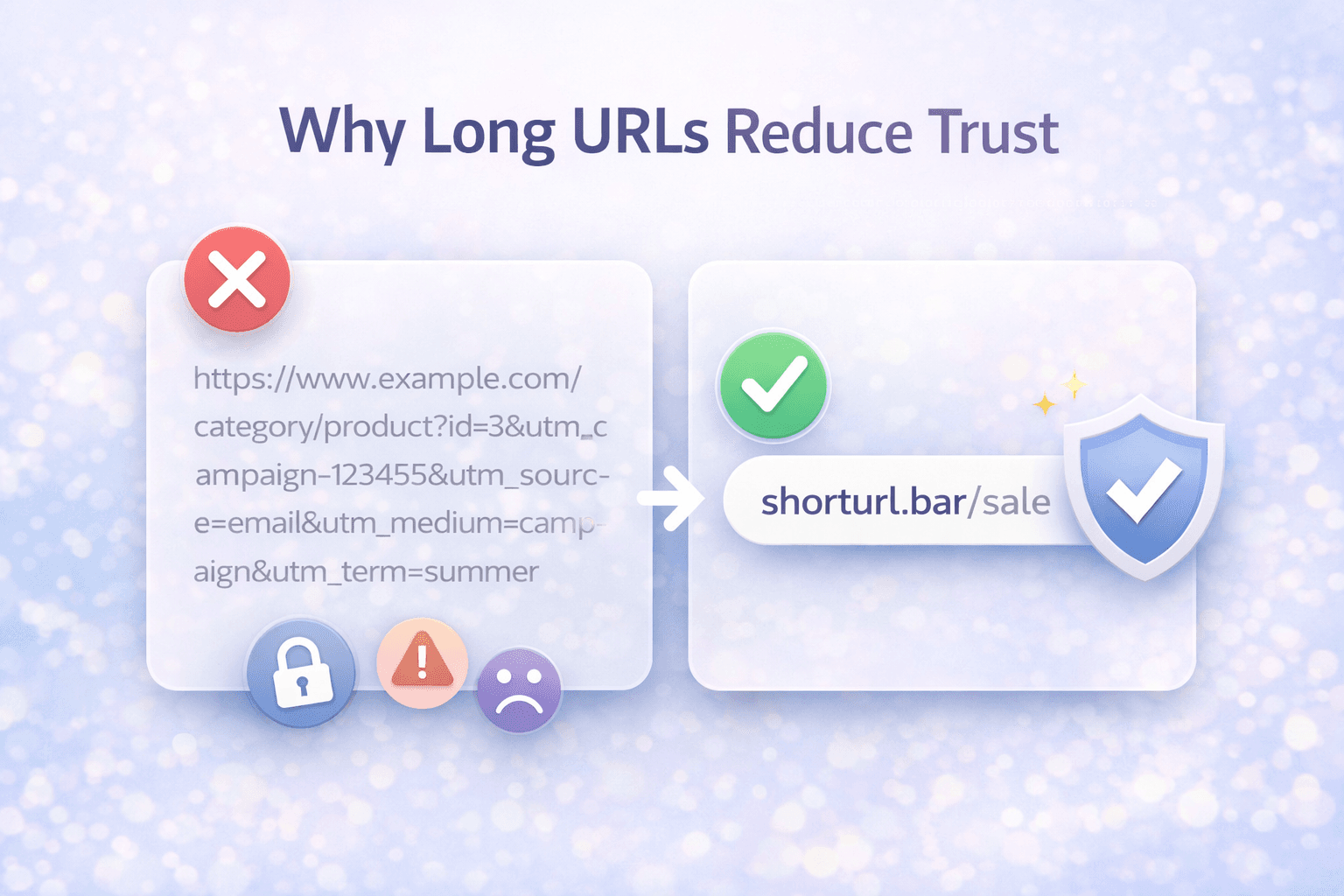
https://www.example.com/products/category/summer-sale/shoes?utm_source=email&utm_medium=newsletter&utm_campaign=summer_launch&utm_id=campaign123&fbclid=IwAR3x...That works perfectly. But it also looks like the server had a sneezing fit.
The problem isn't the tracking - the problem is the exposure. Users see utm_source=email and &fbclid= and their brain says: I don't know what this is, therefore I don't trust it.
Why Long URLs Kill Trust - The Real Reasons
They trigger phishing instincts
This is the big one most marketing guides skip over.
According to a 2024 report by Proofpoint, phishing emails remain the most common vector for cyberattacks - and users have been trained, consciously or not, to treat long, parameter-filled URLs as a warning sign. That training doesn't disappear when a legitimate brand sends a newsletter.
Your email campaign isn't a phishing attempt. But your URL might look like one.
They hide where the link actually goes
A long URL buries the destination domain under layers of paths and parameters. A user scanning quickly - which is how most people read emails and WhatsApp messages - cannot easily tell whether https://brand.com/click?id=9823... goes to your website or somewhere else entirely.
Short branded links solve this immediately. yourbrand.link/summer-sale tells you the brand, and it tells you the destination. Done.
They look like the sender doesn't care
This is softer, but it's real. When you receive a link that ends in &utm_campaign=july_promo&gclid=CjwKCAj..., the implicit message is: the person who sent this didn't clean it up. They copy-pasted the raw output from their tool and hit send.
That's a small thing. But small things add up to brand perception.
Mobile screens make it worse
Most email opens happen on mobile. According to Litmus's 2024 Email Analytics report, just under 60% of all email opens occur on a mobile device.
On a 390px-wide screen, a 200-character URL wraps awkwardly, truncates unpredictably, and often just looks like noise. Mobile users don't hover over links to preview them. They decide to click - or not - based on what they can see. Long URLs make that decision easier in the wrong direction.
How This Affects Your Click-Through Rates
CTR isn't just a vanity metric. It's the difference between a campaign that pays for itself and one that doesn't.
The specific impact of URL length on CTR varies by channel and audience. But directionally, the effect is consistent: unclear links underperform clear ones. The trust gap is especially pronounced in:
- Cold outreach emails - where the recipient has no prior relationship with the sender
- SMS campaigns - where the link is often the only content
- WhatsApp messages - where security-conscious users are already wary of forwarded links
- Social posts - where visible URL previews make ugly parameters immediately obvious
Even a 5–10% improvement in CTR, compounded across a full campaign, represents real money. The link is usually the last obstacle between your audience and your conversion goal. Don't let it be the thing that stops them.
What Short Links Actually Solve
Short links aren't just about aesthetics. Here's what they actually change:
- Destination transparency. A branded short link like shorturl.bar/summer tells the reader exactly where they're going before they click. There's no ambiguity.
- Sender recognition. When you use a custom branded domain - yourbrand.link/promo instead of a generic shortener - users see your brand name in the URL itself. That recognition builds confidence before the click happens.
- Shareability. A short link fits in a tweet, an SMS, a WhatsApp message, and a QR code without breaking, truncating, or overwhelming the surrounding content. A 200-character URL does not.
- Cleaner analytics. This is the part most people don't mention: short links let you track real-world performance without exposing your tracking parameters to the user. Your UTM data lives in the redirect, invisible to the reader, visible to your dashboard.
Where Long URLs Hurt You Most
Not all channels are equally affected. Here's a quick breakdown:
| Channel | Long URL Risk | Why It Matters |
|---|---|---|
| Email marketing | High | Preview text shows the URL; users scan before clicking |
| WhatsApp campaigns | Very high | Security-aware audience; forwarded links get extra scrutiny |
| SMS | Very high | Character limits make long URLs impractical and ugly |
| Social media posts | Medium-high | URL previews expose parameters; looks unprofessional |
| QR codes | Medium | Long URLs increase QR complexity and error rate |
| Offline print materials | High | Nobody types a 150-character URL from a flyer |
For WhatsApp marketing specifically, this is especially acute. WhatsApp users tend to be more security-conscious than email readers - they've seen enough forwarded scam links to be cautious by default. A clean branded link in a WhatsApp message does more than look nice. It actively reduces the friction that causes recipients to ignore your message.
What I've Seen Firsthand
The clearest example I've come across was a small e-commerce brand running the same discount campaign across two channels simultaneously - email and WhatsApp - using identical creative, identical offer, identical timing.
The email used a raw UTM link straight out of their ESP. The WhatsApp message used a short branded link through ShortURL. Same product page. Same discount. Same audience segment.
The WhatsApp campaign with the branded link got a 34% higher click rate than the email with the raw URL.
Now, that difference is partly channel, partly format - I'm not saying the link alone caused everything. But the brand owner told me something that stuck: "Our WhatsApp audience trusts us. We didn't want to send them something that looked sketchy."
That's the real insight. Trust isn't built in big moments. It's built in the details - and a link is a detail your audience sees every single time.
Best Practices, Quickly
A few things worth doing before your next campaign:
- Use short links in every channel where you can't control how the URL will render
- Set up a branded domain so your business name appears in every link you share
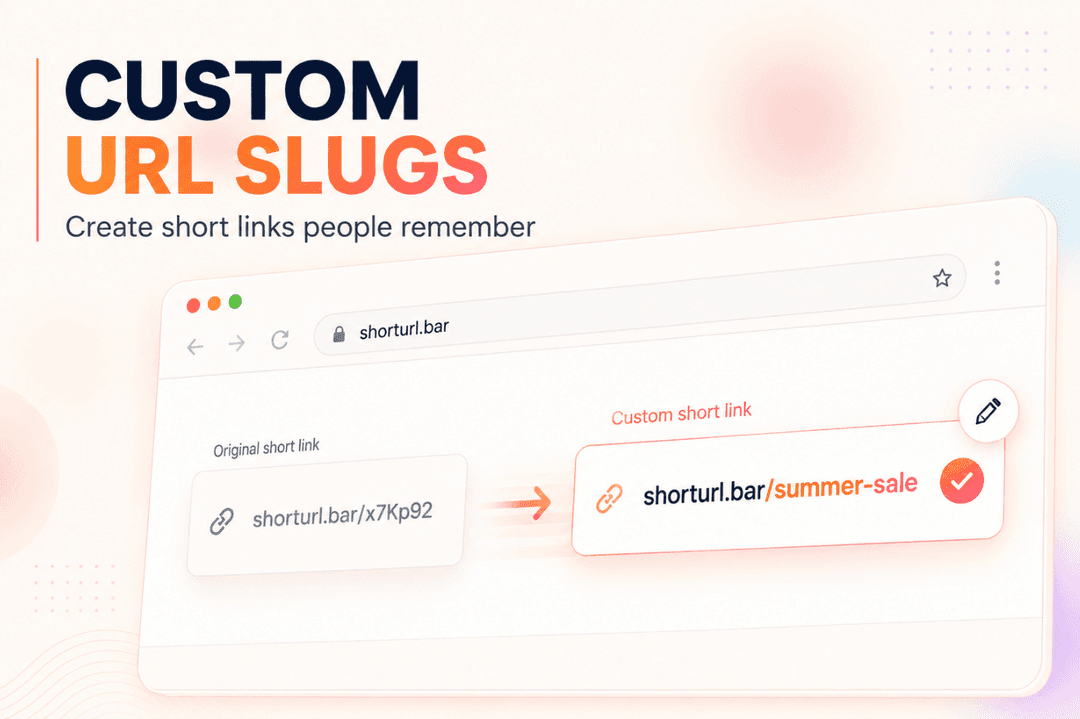
- Give your short links meaningful slugs - /summer-sale beats /a8f3k2 every time
- Test your links on mobile before sending - see what your audience actually sees
- Keep your slug naming consistent across campaigns so repeat visitors recognize the pattern
- Never share a raw affiliate URL - short link it, always
You can set this up with ShortURL's branded URL shortener for marketers, which handles branded domains, custom slugs, and click tracking in one place.
The SEO Angle (Brief, Because It's Secondary)
Trust affects behavior. Behavior affects engagement signals. Engagement signals matter for SEO - not in a direct "Google reads your URL" way, but in the compounding sense that campaigns which generate higher CTR and lower bounce rates gradually support stronger organic performance.
Using clean, trusted links in your off-page channels isn't an SEO tactic. But it's consistent with the kind of user experience that tends to perform better over time.
FAQ
Why do long URLs make people hesitant to click?
Because they resemble phishing links. Parameters like &fbclid= and &utm_id= look like tracking code to the average user - and tracking code is something phishing URLs use too. The hesitation is instinctive and mostly subconscious.
How do I shorten a URL for a marketing campaign without losing tracking data?
Use a URL shortener that supports UTM passthrough or internal analytics. You create the short link, the redirect carries your UTM parameters silently, and the user only ever sees the clean branded link. ShortURL's campaign link tracker does this natively.
Are branded short links actually worth the extra setup?
Yes, if you're running any volume of campaigns. The setup takes about 20 minutes and the benefit - your brand name in every link you share - compounds over time. It's the difference between bit.ly/3xF2k and yourbrand.link/summer. One builds recognition. The other doesn't.
Do short links hurt SEO?
No. Short links use 301 redirects, which pass link equity correctly. Google has confirmed this. The short link is not the page - it's the path to the page.
What's the best slug format for a short link?
Keep it readable and relevant. /summer-sale, /free-trial, /case-study-2026 - all good. Avoid numbers-only or random character slugs unless you're specifically trying to obscure a temporary link. Readable slugs also make your analytics reports easier to parse later.
Does link length affect email deliverability?
Indirectly. Emails full of long, parameter-heavy URLs can trigger spam filters - particularly those that flag tracking parameters. Clean short links reduce that risk and keep your deliverability healthier over time.
If your campaigns are already using tracking but your links still look like raw output from a tool, the how to track clicks using short links guide covers the full setup - including how to preserve your attribution data through a short link redirect.
And if you're comparing tools before committing to one, best URL shorteners in 2026 breaks down the main options with an honest look at what each does well.
ShortURL's branded URL shortener for marketers
You can set this up with ShortURL's branded URL shortener for marketers, which handles branded domains, custom slugs, and click tracking in one place.