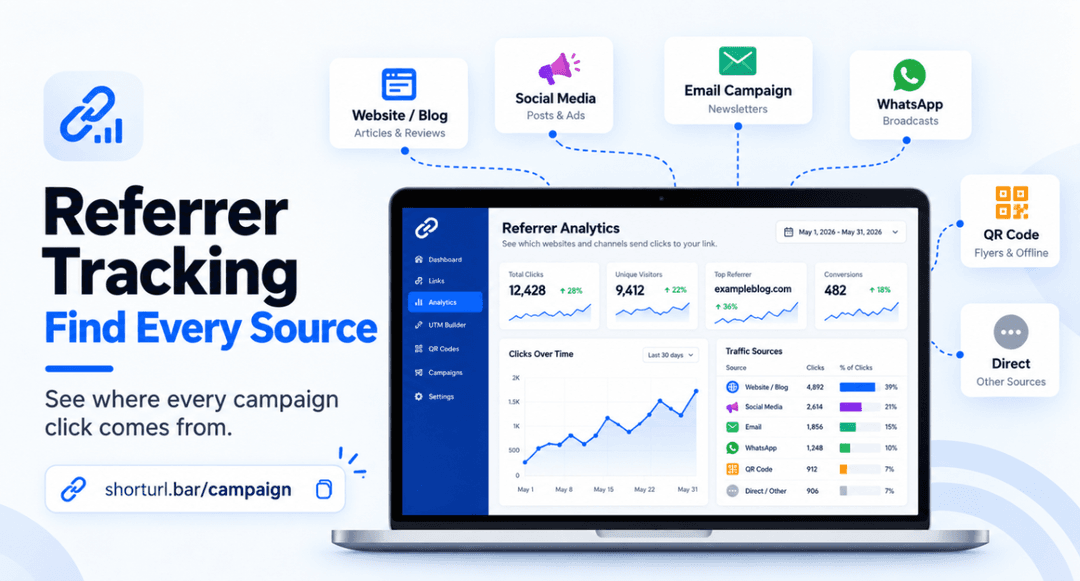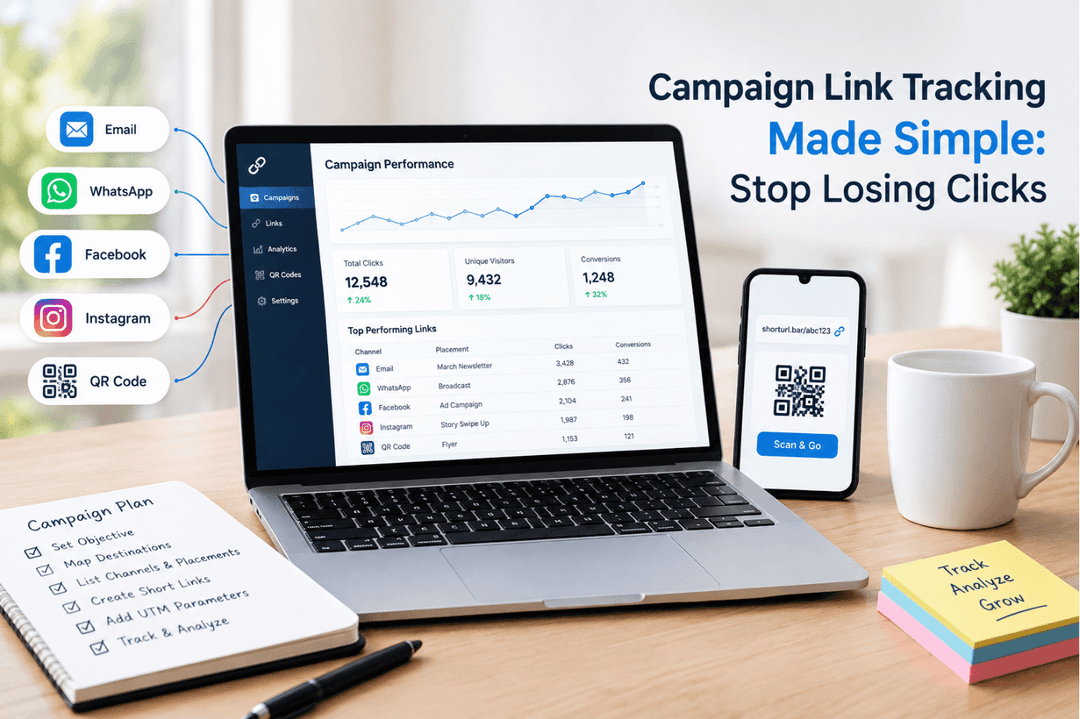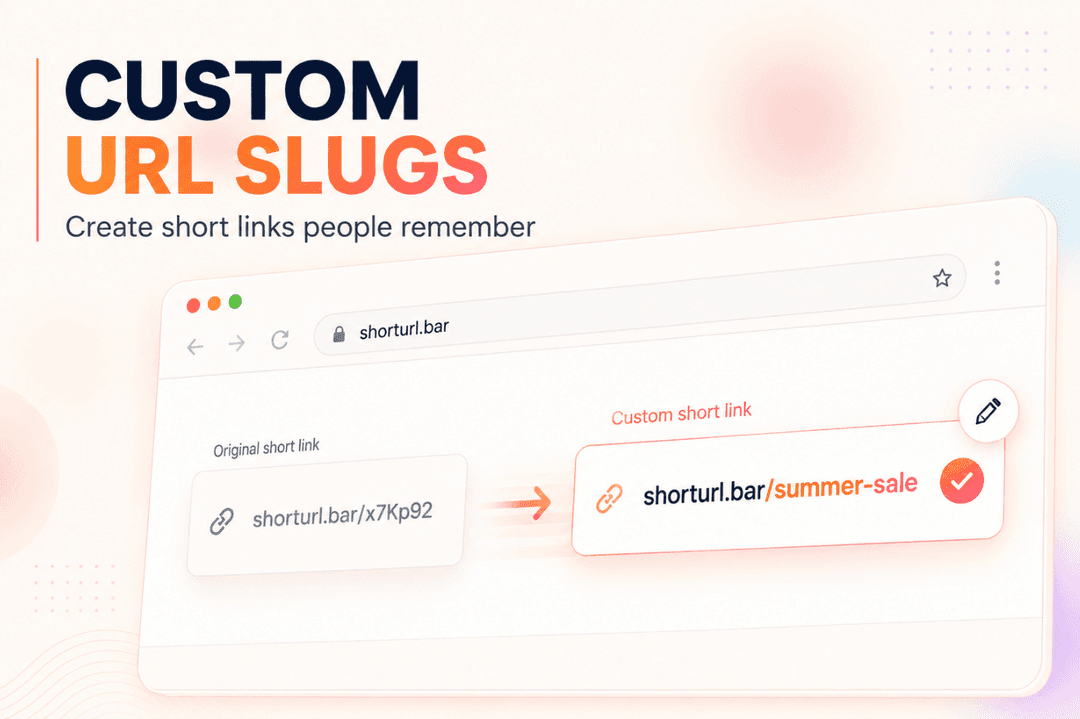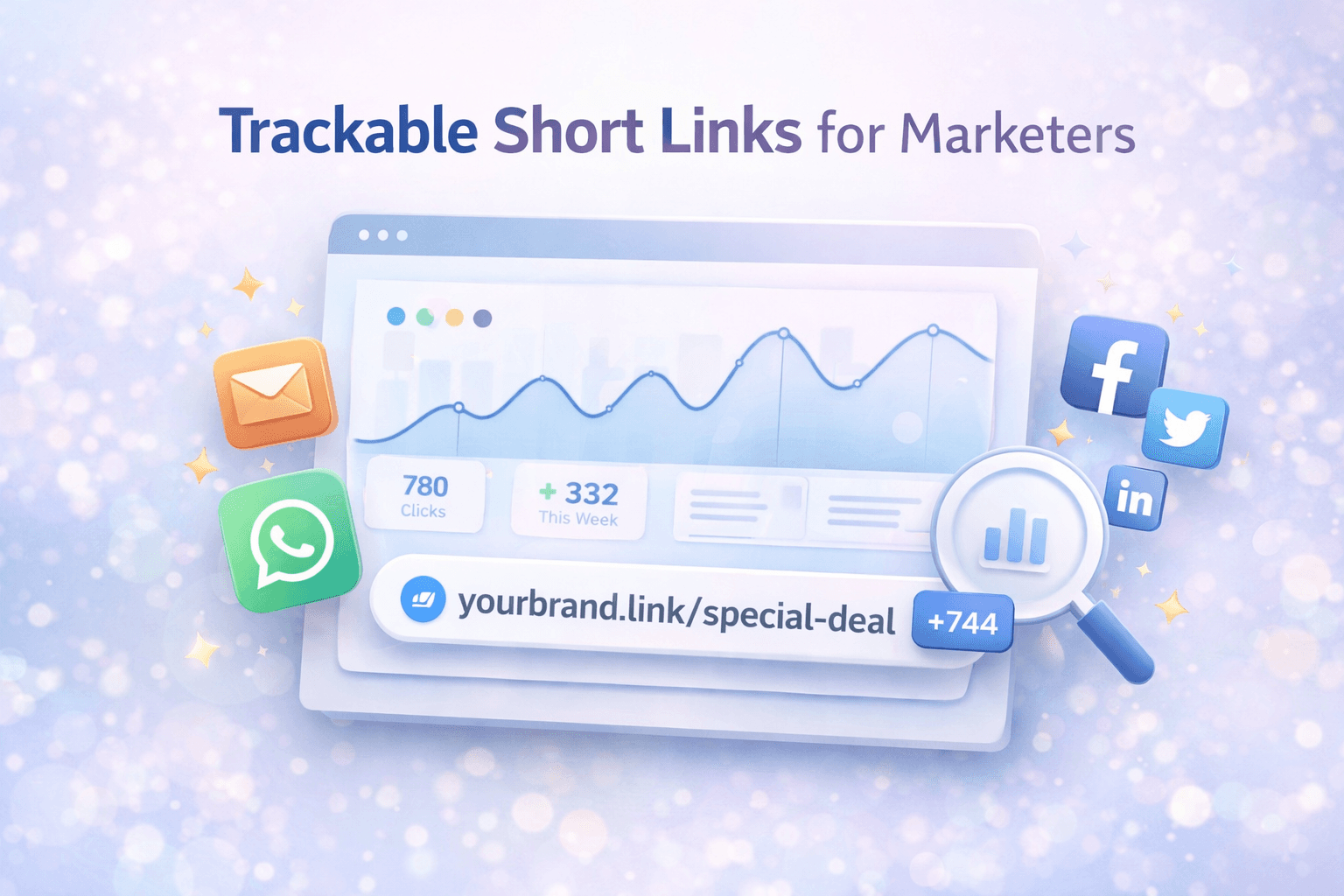
That's the problem trackable short links solve. At ShortURL.bar, we work with marketing teams who rely on clean, trackable URLs to stop guessing and start seeing exactly where their audience comes from. This guide covers what trackable short links for marketers actually are, how they work, and where most teams go wrong with them.
What Are Trackable Short Links?
A trackable short link is a shortened URL that records user interactions - clicks, traffic sources, and engagement patterns - before the user ever reaches the destination page.
Here's what that looks like in practice.
Say your campaign URL looks like this:
https://www.example.com/product-page?utm_source=email&utm_medium=campaign&utm_campaign=summer-saleYou'd shorten it to something like:
https://yourbrand.link/summer-saleCleaner. Easier to share. And behind that short link, every click gets logged - including the time, the device, and (with proper setup) the channel it came from.
That's the core idea. Short on the outside, data-rich on the inside.
Why Marketers Use Trackable Short Links
1. Measure Campaign Performance
This is the obvious one - but it's worth being specific about why it matters.
When you use a single destination URL across five different channels, your analytics tool can't separate them. Everything lands in one bucket. You see total clicks, but you don't know whether those clicks came from your email blast or that one Instagram post that went slightly viral.
Trackable short links fix that by letting you create a separate link for each channel. Different link per campaign × different link per channel = clear, separated data.
Common examples:
- yourbrand.link/email-offer - for your newsletter
- yourbrand.link/whatsapp-sale - for WhatsApp broadcasts
- yourbrand.link/social-launch - for social media posts
- yourbrand.link/sms-promo - for SMS campaigns
Your reporting gets sharper. And fast.
2. Understand Traffic Sources
Most marketers assume they know which channels are working. The data usually disagrees.
According to a 2024 HubSpot marketing report, 61% of marketers say attribution is one of their top measurement challenges - meaning most teams still can't accurately say which channel drove a specific result. Trackable links change that. Instead of guessing, you check the dashboard and see exactly which link drove the most clicks.
It's not complicated. But most teams skip it.
3. Improve Marketing ROI
Here's where it gets genuinely useful. When you know which channels are producing clicks, you can put more budget there. And just as importantly, you can stop spending on the ones that aren't.
Say your WhatsApp campaign gets 3× the clicks of your email campaign for the same offer. That's not a signal to cut email - but it is a signal to invest more in WhatsApp, test better email subject lines, and stop assuming both channels perform equally. Trackable links give you that data.
According to Nielsen's 2023 Annual Marketing Report, brands that consistently measure channel performance allocate marketing budgets 45% more efficiently than those that don't.
4. Create Organized Campaign Structures
And this one's underrated. When you're running five campaigns simultaneously across three channels, link management becomes a real operational problem.
Trackable short links with consistent naming patterns keep things organized across your team. Everyone knows yourbrand.link/email-offer is the email version and yourbrand.link/whatsapp-offer is the WhatsApp version. No confusion, no spreadsheet hunting, no "which link did we use for that March campaign?"
Common Use Cases for Trackable Short Links
Trackable links show up across nearly every marketing channel. Here's where teams actually use them:
| Channel | What You Track |
|---|---|
| Email Marketing | Click-through rates per newsletter, open-to-click conversion |
| WhatsApp Marketing | Engagement per broadcast list, message-to-click rate |
| Social Media | Performance per post, per platform, per content type |
| SMS Campaigns | Mobile click rates, time-of-day patterns |
| Paid Ads | Cross-channel ad comparison, cost-per-click by source |
| Affiliate Marketing | Referral clicks per partner or influencer |
| QR Code Campaigns | Offline-to-online traffic from print, packaging, events |
The QR code use case is one I see teams miss. If you're printing links on flyers, packaging, or event materials, a trackable short link behind the QR code means you can measure foot-traffic-to-digital conversion - something most analytics tools can't do on their own.
How Trackable Short Links Work
The process is simpler than it sounds.
- You create a short link using a URL shortener like ShortURL.bar
- The tool stores the destination URL along with any tracking parameters you set
- When someone clicks the short link, the system intercepts the request and logs it
- The user is redirected to the destination page - typically in under 300 milliseconds
- The click data appears in your dashboard, showing source, time, device type, and location
That's it. The user never notices. The redirect is fast enough that it doesn't affect their experience.
And here's what the data looks like on your end - for a single campaign link, you can typically see:
- Total clicks and unique clicks
- Clicks by date and time
- Device type breakdown (mobile vs desktop)
- Geographic data (country, city)
- Referring source (if UTM parameters are embedded)
This is the kind of granularity that makes channel optimization actually possible, rather than theoretical.
Key Features of Trackable Short Links
Not all short link tools are the same. The ones that actually support serious marketing workflows include most of these:
- Click tracking - total and unique clicks per link
- Campaign-level analytics - group links by campaign to see aggregate performance
- Custom short URLs - branded domains like yourbrand.link instead of random characters
- Channel-specific tracking - separate data per channel per campaign
- Link organization tools - folders, tags, and naming systems for large link libraries
- Performance insights - time-based trends and top-performing links
- Branded link support - your domain name on every link, not a third-party domain
The branded domain piece matters more than most people think. We covered that in detail in our guide to what a branded URL shortener actually is - but the short version is: links with your brand name in them get more clicks, because people trust what they recognize.
Trackable Short Links vs Regular Links
This comparison is worth stating plainly:
| Feature | Regular Link | Trackable Short Link |
|---|---|---|
| Click tracking | ✗ | ✓ |
| Traffic source visibility | ✗ | ✓ |
| Channel attribution | ✗ | ✓ |
| Clean, shareable format | Sometimes | ✓ |
| Branded appearance | ✗ | ✓ |
| Campaign analytics | ✗ | ✓ |
| Works in WhatsApp / SMS | ✗ (links break) | ✓ |
Regular links get the user to the destination. That's it. Trackable short links do that too - but they also tell you what happened along the way.
For any team that cares about marketing performance (rather than just activity), the difference isn't minor. It's the difference between knowing what's working and guessing.
Best Practices for Using Trackable Short Links
A few things that make the biggest difference in practice:
- Create a separate link for each channel - one link per email, one per WhatsApp, one per social post. Shared links produce unusable data.
- Use clear, consistent naming patterns - campaignname-channel works well. Something like summer-email, summer-whatsapp, summer-sms.
- Track performance weekly, not monthly - month-end reviews are too slow to catch a failing campaign before budget is wasted.
- Organize links by campaign, not just by date - grouping by campaign makes retrospective analysis much cleaner.
- Review your top-performing links - the links that drive the most clicks usually have something in common. Find it and repeat it.
- Don't reuse old links for new campaigns - the historical click data pollutes your new campaign metrics.
That last one is a common mistake. Teams reuse a convenient short link for a new campaign and then wonder why the numbers look inflated.
SEO Benefits of Trackable Short Links
Short links don't directly improve search rankings. I want to be straight about that, because some tools imply otherwise.
But they do support SEO indirectly - and in ways that are actually measurable.
When you track which platforms drive the most traffic to your content, you can focus your promotion efforts on the channels that send the most engaged visitors. High-quality referral traffic (people who actually read and share your content) is a behavioral signal that search engines factor into rankings over time.
For example: if you're promoting a blog post and your ShortURL.bar data shows your LinkedIn link drives 3× more clicks and a lower bounce rate than your Twitter link, that's a clear signal about where your audience actually is. Invest more promotion effort there.
We covered the relationship between link trust and traffic more in our post on why long URLs reduce trust and how short links fix the problem - including why messy URLs actually reduce click-through rates in email and SMS.
What Changed When We Started Tracking Every Link
Honestly, the first time I set up channel-specific trackable links for a client campaign, the results were surprising in the wrong direction.
We were running the same offer across email, WhatsApp, and two Facebook ad sets. Everyone on the team assumed the Facebook ads were the main traffic driver. That's where the biggest budget was.
When we looked at the actual click data three weeks in, WhatsApp had driven 58% of the total clicks - at basically zero cost. Email was second at 31%. Facebook ads? 11%. Combined.
We weren't running WhatsApp campaigns well. They were almost casual - one broadcast to a small list. But the engagement rate was dramatically higher than any paid channel.
If we hadn't had separate trackable links, we'd have looked at the total click number, assumed the paid budget was doing the work, and kept spending. Instead, we pulled back on one of the Facebook ad sets, invested more time into building the WhatsApp list, and the next campaign did 40% more clicks on 20% less spend.
That's what tracking actually does. It doesn't just show you numbers - it catches the assumptions that are costing you money.
Final Thoughts
Trackable short links aren't complicated. The concept is simple: one link per channel, real data per campaign, decisions based on what's actually working.
But most marketing teams still share the same URL everywhere and wonder why their attribution is messy. The fix takes about ten minutes to set up.
If you're running campaigns across email, WhatsApp, social, or SMS, start with ShortURL.bar's campaign link tracker - it's built specifically for marketers who need clean channel-level data without a complex analytics stack.
And if you're using UTM parameters already but want cleaner links, check out our UTM link shortener - it keeps the tracking intact while giving you a link that actually looks shareable.
For teams at serious volume, the branded URL shortener adds your own domain name to every link, which - based on what we see consistently - increases click-through rates on its own.
Frequently Asked Questions
What are trackable short links used for in marketing?
Trackable short links are used to measure click performance, identify which marketing channels drive the most traffic, and improve campaign attribution. Marketers create separate links for each channel - email, WhatsApp, SMS, social - so they can see exactly which one is working instead of guessing from combined totals.
How do trackable short links work?
When someone clicks a trackable short link, the system logs the click (recording time, device, and location), then redirects the user to the destination page in under a second. The click data appears in your analytics dashboard, where you can filter by campaign, channel, date range, and other dimensions.
Do trackable short links help improve marketing ROI?
Yes - because they show you which channels are worth the spend and which aren't. According to Nielsen's 2023 Annual Marketing Report, marketers who consistently measure channel performance allocate budgets 45% more efficiently than those who don't. Trackable links make that measurement possible at the individual campaign level.
What's the difference between trackable and regular short links?
Regular short links just redirect users to a destination. Trackable short links do the same redirect but also collect click data - including traffic source, device, location, and time. For any marketing use case where performance matters, regular short links give you nothing to work with.
Start with ShortURL.bar's campaign link tracker
If you're running campaigns across email, WhatsApp, social, or SMS, start with ShortURL.bar's campaign link tracker - it's built specifically for marketers who need clean channel-level data without a complex analytics stack.
ShortURL.bar's campaign link tracker