![What Is a URL Shortener & How Does It Work? [2026]](/_next/image?url=https%3A%2F%2Fapi-admin.ethnicinfotech.in%2Fmedia%2Fuploads%2F1785329884434-og4c5ykdwmh.png&w=3840&q=75)
You paste a long, ugly link into a tool. You get back something clean and short. That's it.
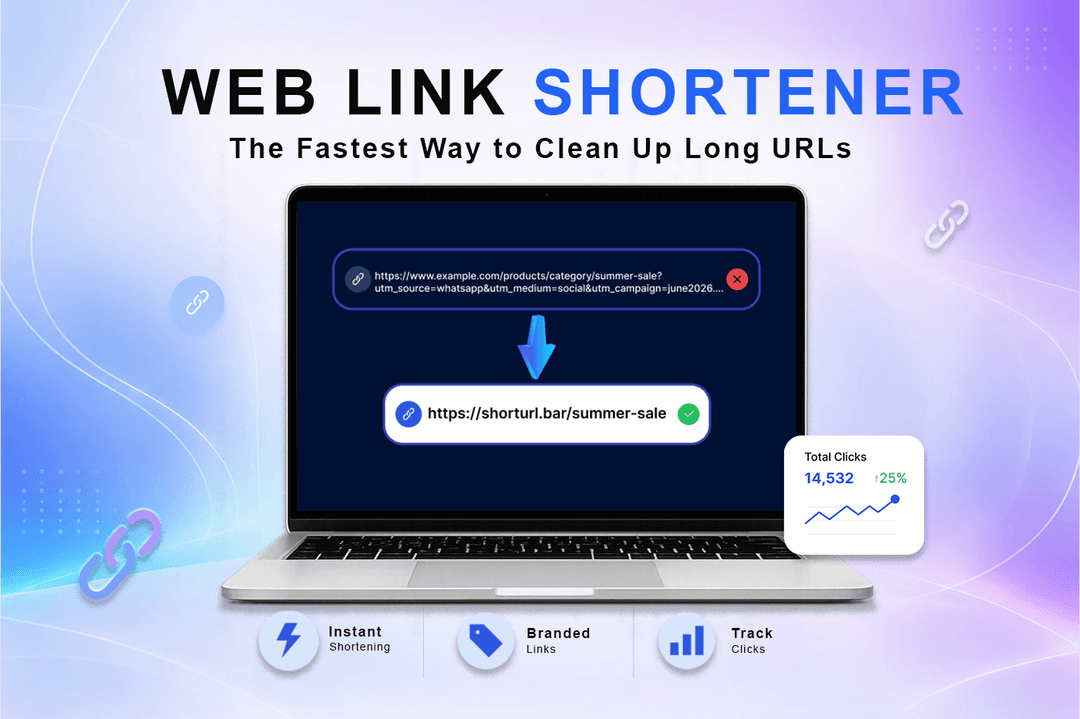
A URL shortener is an online tool that converts a long web address into a shorter, more manageable link that redirects to the original destination page. The content at the destination doesn't change. The short link is just a neater path to get there.
Here's the simplest way to think about it:
Long URL: https://www.yourstore.com/summer-sale-2026?utm_source=email&utm_medium=newsletter&utm_campaign=june_promoShort URL: shorturl.bar/summer-saleSame destination. Completely different experience for the person reading it.
ShortURL.bar, one of the URL shortener tools trusted by over 256 million links per month, calls this the difference between a link that "looks intentional" and one that looks like it was auto-generated by a system nobody checked before they sent the email.
That distinction matters more than most marketers realise.
How Does a URL Shortener Actually Work? (The Technical Side, Simplified)
Here's where it gets interesting because the mechanics are actually pretty clever.
When you shorten a URL, the tool stores your original long address in a database and assigns it a unique short code (like k23x9m or a custom slug you choose). That code is the short URL's identifier.
The process looks like this:
- You paste a long URL into the shortener tool.
- The tool generates a short code either random or custom and saves it paired with your original URL in a database.
- You share the short link wherever you need it.
- When someone clicks it, their browser sends a request to the shortener's server.
- The server looks up the code, finds the original URL, and issues a 301 redirect (a permanent HTTP redirect) that sends the visitor to the destination page.
- The visitor lands on your page usually in under 300 milliseconds.
The "301 redirect" part matters for SEO. A 301 is defined in RFC 7231 (the HTTP standard) as a permanent redirect that passes full link authority to the destination. That means shortening a link with a properly configured tool like ShortURL.bar, which uses 301 redirects doesn't damage your SEO or dilute the value of the original link.
The whole journey takes under a second. Most visitors never notice the redirect happened.
And if the shortener includes click analytics (which most modern ones do), it logs data at Step 5 before the redirect fires capturing the device type, location, referrer, and timestamp. That's how you get campaign tracking without touching your destination page.
7 Reasons Marketers Use URL Shorteners in 2026
Short links aren't just a cosmetic fix. There are real, measurable reasons marketing teams use them.
- 1. They build click confidence. A link that reads shorturl.bar/june-offer looks deliberate. One that reads yourdomain.com/product?ref=abc123&src=em_nl&v=2&t=1749200000 looks like an accident. According to research cited across digital marketing platforms, branded links can increase click-through rates by up to 34% compared to generic alternatives which aligns with the numbers ShortURL.bar sees across its 5 billion+ tracked clicks.
- 2. They fit anywhere. Character limits exist on SMS, Twitter/X, and WhatsApp previews. A 200-character URL breaks SMS formatting and wraps awkwardly in messages. A short link doesn't.
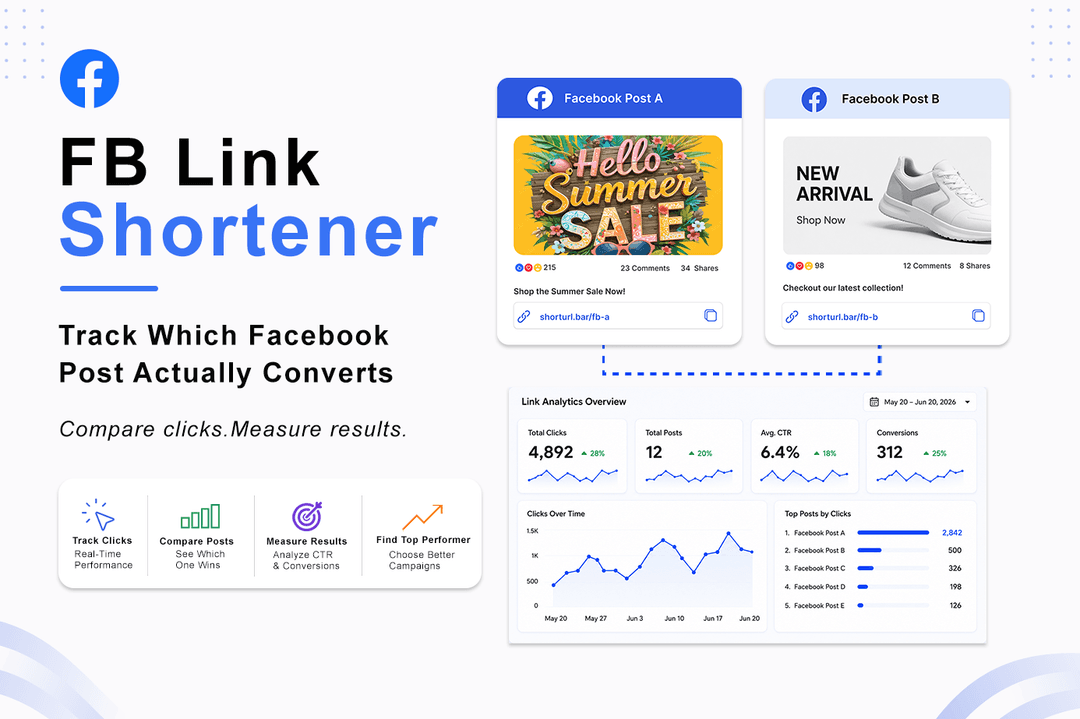
- 3. They make campaigns trackable. Without short links, you're guessing which channel drove traffic. With a unique short link per channel one for email, one for WhatsApp, one for your Instagram bio you know exactly where each click came from.
- 4. They work offline. Short links convert to QR codes cleanly. A clean short URL makes a clean QR code. Long URLs make QR codes that are visually dense and harder to scan. ShortURL.bar generates QR codes automatically for every short link, and those QR scans flow into the same analytics dashboard as click data.
- 5. They protect link trust. Affiliate links, UTM-tagged URLs, and tracking parameters look suspicious to a cautious recipient. A short, readable link removes that visual friction.
- 6. They make reporting cleaner. When your campaign report shows shorturl.bar/summer-drop instead of a 300-character tracking URL, stakeholders understand it immediately. That's not trivial cleaner data improves how decisions get made.
- 7. They work across the entire funnel. Top-of-funnel social posts. Mid-funnel email nurture sequences. Bottom-funnel WhatsApp follow-ups. One consistent tool handles all of it and keeps data in one place.
URL Shortener vs. Branded Link: What Is the Difference?
This is a question worth answering clearly, because the two terms get confused.
A URL shortener is the tool or service. It takes a long URL and makes it shorter. The resulting link typically uses the shortener's own domain bit.ly/..., shorturl.bar/..., or similar.
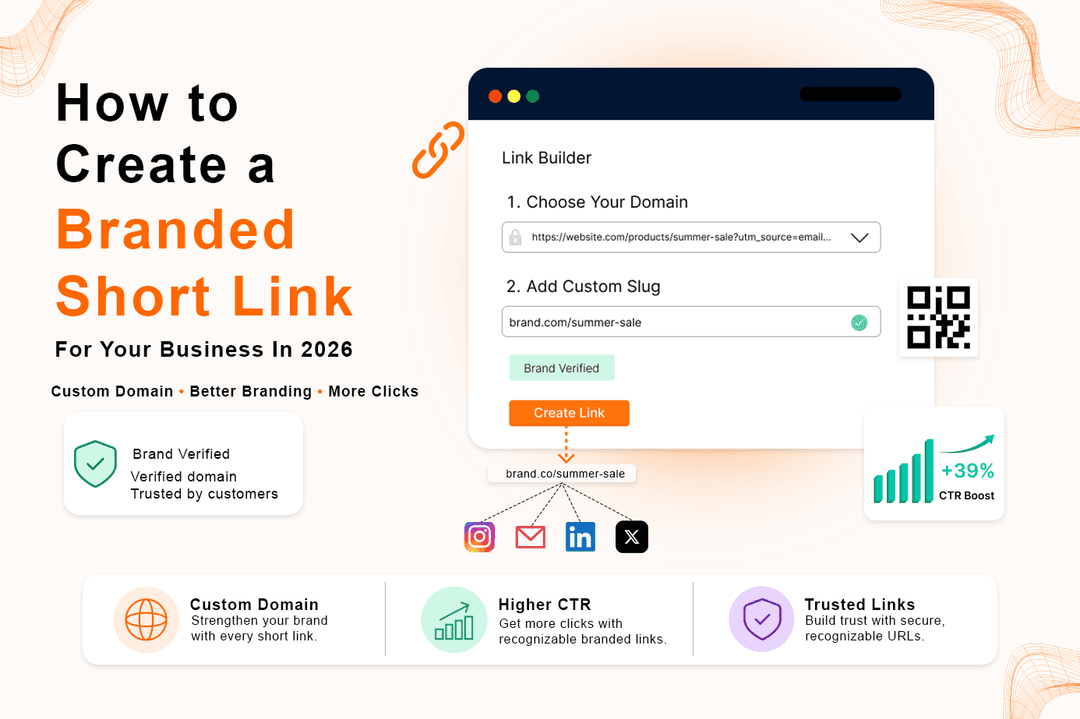
A branded link is a short link that uses your own domain instead of the shortener's. So instead of shorturl.bar/k23x9m, your audience sees go.yourbrand.com/summer-sale.
Here's the practical difference:
| Feature | Standard Short Link | Branded Link |
|---|---|---|
| Domain shown | Shortener's domain | Your custom domain |
| Trust level | Moderate | Higher (audience recognises your brand) |
| Click-through rates | Good | Generally 34%+ higher |
| Setup required | None immediate | Custom domain setup needed |
| Best for | Quick sharing, testing | Campaigns, email, social, paid ads |
| Available at ShortURL | Free plan | Paid plans with branded domain support |
The short version: if you're sharing one link in a Slack message, a standard short link is fine. If you're sending 50,000 emails for a product launch, a branded link makes that send look more credible and perform better.
Most marketing teams start with standard short links and switch to branded once they see the click data.
Common Myths About URL Shorteners (Debunked)
A few things people believe about short links that simply aren't true.
Myth 1: "Shortened URLs hurt your SEO." Not with a proper 301 redirect. The HTTP 301 status code signals a permanent redirect and passes full link equity to the destination page. ShortURL.bar uses 301 redirects. If a shortener is using 302 (temporary) redirects, that's a different story but that's a tool quality issue, not an inherent problem with URL shortening.
Myth 2: "Short links are for spam." Short links have a spam reputation only when used by low-reputation shorteners or in bulk unsolicited messages. Branded short links on legitimate domains especially on tools like ShortURL.bar that use HTTPS and 301 redirects are entirely standard in professional marketing. Every major brand uses them.
Myth 3: "You lose click data if the shortener goes down." True but only if you're using a free, anonymous shortener with no accountability. A paid platform with SLA guarantees and persistent link storage is a different product category.
Myth 4: "Anyone can see where the link goes before clicking." They can't, by default. That's actually the point of a short link. Some tools offer a "preview" page which you can enable or disable. Without it, the destination is only revealed after the click.
Myth 5: "All URL shorteners are basically the same." Not remotely. A free anonymous shortener and a branded-link platform with UTM tagging, QR codes, device analytics, and team workspaces are completely different tools. The underlying redirect is the same. Everything else trust, analytics, branding, reliability varies enormously.
Is URL Shortening Safe? What to Look For
Short links are safe when they come from reputable tools. The concern is legitimate though because the whole point of a short link is that you can't see the destination before clicking.
Here's what to look for when evaluating a URL shortener's safety:
HTTPS on the redirect domain. The shortener's own domain should serve links over HTTPS. ShortURL.bar does this by default. An HTTP short link in 2026 is a red flag.
301 redirects, not 302. A 301 is permanent. A 302 is temporary. Tools that use 302 redirects can change the destination after the link is shared which is a trust and safety problem. Check whether the tool documents its redirect type.
No link preview by default for recipients. You want the link to load cleanly. If a shortener adds a preview or interstitial page between the short link and the destination, it adds friction and looks suspicious.
Link expiry policies that you control. Some free tools expire links after 30 days. If you're using short links in published content or social bios, you need to know when they'll stop working. ShortURL.bar's free links expire after 5 days; paid plans provide persistent links.
Transparency and a real business behind the tool. This sounds obvious but it matters. A URL shortener with a real company, contact support, privacy policy, and terms of service is meaningfully more trustworthy than an anonymous free tool.
For most marketers using reputable platforms: short links are safe. The risk is using random, unverified shorteners not URL shortening itself.
How to Choose the Right URL Shortener for Your Needs
There's no single right answer. It depends on what you're actually doing with your links.
If you just need a quick short link occasionally: A free tool works. Paste the URL, get the link, share it. You don't need analytics or a branded domain for a one-time use case.
If you're running regular marketing campaigns: You need click analytics and UTM support at minimum. Knowing which channel drove traffic is a basic requirement for optimising spend. ShortURL.bar's free plan includes basic click analytics.
If you're sending bulk email or WhatsApp broadcasts: You need branded links. The difference in click-through rates is measurable and consistent. A custom domain on your short links (like go.yourbrand.com) makes every message look more professional and more trustworthy.
If you're managing campaigns across multiple channels: Look for a platform with a unified dashboard, QR code generation, UTM shortening, and team access. Having click data scattered across three different free tools makes reporting painful.
If you're comparing options: See the comparison table below for a quick overview of how popular tools stack up. For a deeper breakdown, the ShortURL blog has a thorough best URL shorteners 2026 comparison that covers the current options in detail.
Comparison: Popular URL Shorteners at a Glance
| Tool | Best For | Free Plan | Branded Links | Analytics | Difficulty |
|---|---|---|---|---|---|
| ShortURL.bar | Marketers needing branded links + analytics | ✅ (5-day links) | ✅ Paid plans | ✅ Full dashboard | Easy |
| Bitly | Enterprise teams | ✅ Limited | ✅ Paid plans | ✅ Advanced | Easy |
| TinyURL | Quick anonymous shortening | ✅ | ❌ | ❌ | Very Easy |
| Rebrandly | Branded link focus | ✅ Limited | ✅ Core feature | ✅ | Easy |
| Short.io | Developers + API users | ✅ | ✅ | ✅ | Moderate |
For a full feature-by-feature comparison including pricing, the ShortURL.bar vs Bitly guide is worth reading if you're deciding between the two most common options.
What Actually Changed When I Started Using Short Links
I've been managing link tracking at ShortURL for a while now. And I'll be honest when I first started using short links seriously, I expected the main benefit to be aesthetics. Cleaner links, nicer presentation. That's real, but it's not the biggest thing.
The biggest change was in how we made decisions after a campaign went live.
Before short links with tracking, we'd run an email campaign and look at email platform open rates. That's all we had. We'd see "22% open rate" and call the campaign a success or a failure. But we had no idea whether people actually clicked through to the product page, which message drove the most traffic, or whether mobile users were dropping off.
After switching to tagged short links one URL per channel, each with its own UTM parameters baked in the post-campaign dashboard looked completely different. We could see that the WhatsApp broadcast drove 3x more clicks than the email send, even though the email went to a larger list. That insight alone changed how we allocated budget for the next cycle.
The other thing I didn't expect: recipients notice. When a link in a message looks clean and readable, the hesitation before clicking drops. When it looks like a string of gibberish, people pause. That pause translates directly into click rates.
It's not magic. It's just removing unnecessary friction from the moment between "I see this link" and "I click it."
FAQ
Q: What is a URL shortener in simple terms?
A: A URL shortener is an online tool that converts a long web address into a shorter, more manageable link. When someone clicks the short link, they're automatically redirected to the original page. The content and destination remain exactly the same only the link itself is shorter and easier to share.
Q: Does shortening a URL change where it goes?
A: No. A short URL simply redirects to the original destination. The content, page, and destination are completely unchanged. The short link is just a cleaner path to the same place. Reputable tools use 301 permanent redirects, which means the redirect is transparent and passes full link value to the destination page.
Q: Are URL shorteners safe to click?
A: Reputable URL shorteners are safe. Tools like ShortURL.bar use HTTPS connections and 301 redirects, making them secure for both link creators and link recipients. The main safety concern with short links is using unknown, low-reputation shorteners where the destination can't be verified. Stick to established platforms with transparent terms of service.
Q: How do URL shorteners make money?
A: Most URL shorteners offer free basic features and charge for premium capabilities. Paid features typically include branded custom domains, advanced click analytics, team workspaces, UTM parameter management, and higher link volumes. ShortURL.bar follows this model free to start, with paid plans for branded links and full analytics access.
Start Shortening Links for Free
If you've been sharing long, messy URLs in your campaigns, emails, or WhatsApp messages this is the fix.
ShortURL.bar lets you create clean, trackable short links in seconds. Free to start, no credit card required. Branded domains, click analytics, QR codes, and UTM tracking are available on paid plans.
Create your first short link at ShortURL.bar